2026 How to Choose a Low Frequency Inverter for Your Power Needs?
Choosing the right Low Frequency Inverter for your power needs can feel daunting. It's essential to make an informed decision, especially with the many options available today. Renowned expert John Smith, in his recent seminar, stressed, "The right inverter can significantly impact system efficiency." This statement captures the importance of selecting a suitable inverter.
Low Frequency Inverters are designed for specific applications, often found in industrial settings. They can handle heavy loads, making them ideal for powering large equipment. However, miscalculations in needs can lead to inefficient setups. It's vital to assess your power requirements accurately. Without careful consideration, you might end up with equipment that underperforms or costs more than necessary.
When evaluating options, one must look beyond just price. Features like input voltage range, output power capacity, and control options are crucial factors. Adequate research can reveal hidden benefits or limitations. Some customers have regretted their choices later, which highlights the necessity of thorough research before committing to a purchase. Reflection on past experiences can guide better decisions in the ever-evolving landscape of Low Frequency Inverters.

Factors to Consider When Selecting a Low Frequency Inverter
Choosing a low frequency inverter requires careful consideration of multiple factors. Understanding your power requirements is essential. Calculate the total wattage of all devices you want to run. This step helps ensure that the inverter can handle the load efficiently.
Another factor is the inverter's surge capacity. Many appliances require extra power to start. If your inverter can't handle this surge, it may fail. Check the specifications for starting wattage. Find an inverter that has at least a 30% higher surge capacity than your highest-wattage device.
**Tips:** Look for inverters with built-in protections against overloading and overheating. This feature extends the product's lifespan. Don't overlook the importance of warranties—an inverter is a long-term investment. Choose wisely.
While considering voltage compatibility, ensure your inverter matches your battery or power source. Mismatched voltages can damage both the inverter and devices. Additionally, think about size and portability. If you plan to move the inverter around, lightweight options may be more practical, yet performance should not be compromised. Always reflect on these details before making your final choice.
Power Needs Analysis for Low Frequency Inverters
Understanding Your Power Requirements for Low Frequency Inverters
When selecting a low frequency inverter, understanding your power requirements is crucial. Start by calculating your total power needs. Consider all devices that will be connected. Focus on wattage ratings. This gives you a clear picture of how much power you need.
Tips: List all appliances you plan to use. Note their wattages. Add them together for your total. Remember, some devices need more power at startup. Factor this into your calculations.
Also, think about efficiency. A higher efficiency rating means less energy loss. This can lead to savings over time. However, more efficient inverters may come at a higher price. Balance your budget against your needs.
Tips: Compare different models. Look at their specs. Don’t get caught up in features you won't use. It’s easy to overspend on bells and whistles. Evaluate what's truly necessary for your setup.
2026 How to Choose a Low Frequency Inverter for Your Power Needs?
| Parameter |
Description |
Recommended Value |
Notes |
| Rated Power |
The maximum output the inverter can provide. |
3 kW - 10 kW |
Choose based on connected devices. |
| Input Voltage |
Voltage range from the battery or grid. |
12V, 24V, 48V |
Match with battery/system voltage. |
| Output Waveform |
Type of AC waveform produced. |
Pure Sine Wave |
Better for sensitive electronics. |
| Efficiency |
Ratio of output power to input power. |
85% - 95% |
Higher is better for savings. |
| Cooling System |
Method to dissipate heat generated. |
Fan Cooling, Passive Cooling |
Consider environment and usage. |
| Protection Features |
Safety systems to prevent damage. |
Overload, Short Circuit, Overheat |
Essential for reliability. |
Key Features to Look for in a Low Frequency Inverter
When selecting a low-frequency inverter, key features greatly impact efficiency and usability. Look for an inverter with a robust power rating. For most applications, a unit that can handle at least 3000 watts is advisable. This ensures it can power essential appliances without frequent overloads. An inverter’s efficiency rating, typically between 85% to 95%, is another critical factor. Higher efficiency means less energy loss, which translates to savings.
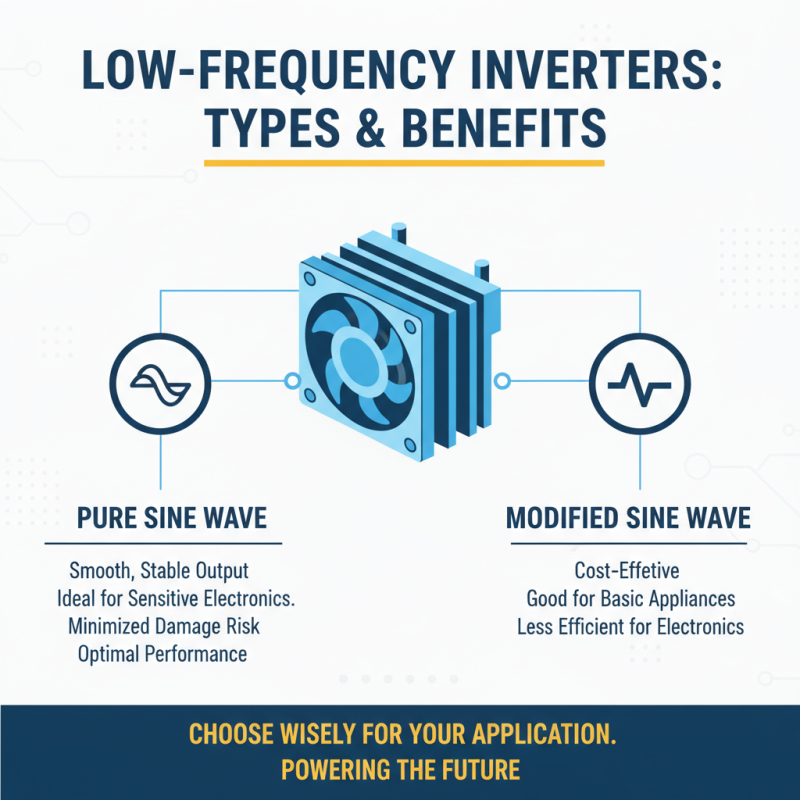
Keep an eye on the waveform output. Pure sine wave inverters offer better performance for sensitive electronics. They reduce the risk of damage and improve appliance functionality. A recent industry report indicated that approximately 40% of inverter-related issues arise from using modified sine wave outputs. Additionally, consider the inverter’s protection features. Good inverters include over-voltage and over-load protection, which can enhance longevity.
Battery compatibility is another aspect worth pondering. Many users overlook this detail at first. The right matches can enhance performance dramatically. Ideally, choose an inverter that supports various battery types, including lithium and lead-acid. This adds flexibility to your energy storage solution. Reflecting on these facets can clarify what meets your specific power needs effectively.
Comparing Brands and Models for Best Value and Performance
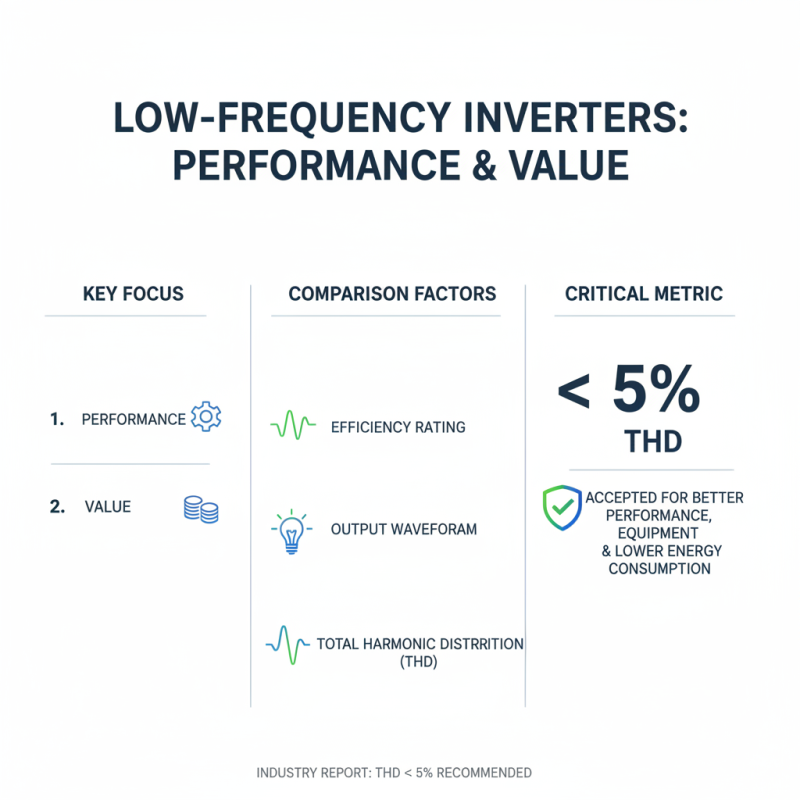
When comparing low-frequency inverters, performance and value should be your main focus. Look at factors like efficiency ratings, output waveform, and total harmonic distortion (THD). According to industry reports, a THD below 5% is generally accepted for better performance. This metric affects the longevity of your equipment and overall energy consumption.
Tips: Always check the inverter’s efficiency under various loads. A high rating under one condition does not guarantee performance in all scenarios. Pay attention to warranties and customer support. These aspects can save you from future headaches.
When evaluating brands and models, read user reviews and case studies. Real-world performance often differs from specifications. Some models may claim high efficiency but fail in practical applications. So, gather as much real data as possible before making a decision. Performance variability can be a concern with certain models. Understanding these elements can lead to better choices.
Tips: Consider how well the inverter fits your specific power needs. Over-purchasing can lead to wasted resources. Conversely, underestimating can cause failures. It's essential to find the right balance.