What is the Best Single Phase Inverter for Your Needs?
When selecting the best Single Phase Inverter, it’s essential to consider various factors. As the solar power industry grows, understanding inverter technologies becomes crucial. According to a recent report by the International Renewable Energy Agency, the market for inverters is expected to reach over $10 billion by 2027. This growth highlights the importance of choosing the right Single Phase Inverter for specific needs.
Expert Paul Smith, a well-known figure in renewable energy, states, "The efficiency of a Single Phase Inverter can significantly influence your overall energy savings." His insights reflect the necessity for energy users to assess their unique requirements. Each application demands different power outputs and efficiencies.
While many products claim to be the best, there are often trade-offs to consider. Reliability and warranty offerings vary widely. Some users may find that lower-cost options sacrifice performance. Evaluating long-term benefits against initial costs can help ensure a wise investment in a Single Phase Inverter. Remember, the right choice may not always be the most obvious one.

Understanding the Basics of Single Phase Inverters
Single phase inverters are essential for converting DC energy into AC energy for residential and small commercial applications. Understanding their basic functions and features can help you choose the right one for your energy needs. These inverters typically support lower electricity loads compared to three-phase inverters. This makes them suitable for homes with typical power requirements.
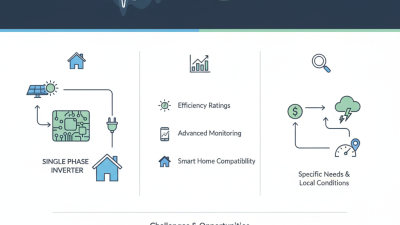
When selecting a single phase inverter, consider the input voltage, output capacity, and efficiency rating. Check if it can handle your specific load during peak times. Energy efficiency is crucial for both performance and cost savings. If the inverter is inefficient, it may lead to excess energy waste and higher utility bills. Make sure to examine user reviews to gauge reliability and functionality.
Some users may find it challenging to integrate these inverters with existing solar systems. Compatibility can be an issue, and it's vital to research technical specifications thoroughly. Reflecting on previous installations can reveal common pitfalls. Overall, understanding these basics will empower you to make a well-informed decision about your energy solutions.
Comparison of Single Phase Inverter Efficiency Ratings
This chart represents the efficiency ratings of various single-phase inverters measured in percentage. The data illustrates the differences in performance which can help you choose the best inverter for your needs based on efficiency.
Key Features to Consider When Choosing a Single Phase Inverter
When choosing a single-phase inverter, several key features must be considered. Efficiency is paramount. A good inverter should achieve at least 95% efficiency. According to a study by the National Renewable Energy Laboratory, higher efficiency translates to better energy savings. This means more solar power conversion into usable electricity.
Another vital aspect is the inverter's power capacity. It's essential to match the inverter's capacity with your energy requirements. A common mistake is oversizing or undersizing the inverter. An oversized inverter might lead to increased costs without added benefits. Meanwhile, an undersized inverter can lead to system inefficiencies, causing losses in energy production.
Compatibility with solar panel systems is also crucial. Ensure that the inverter's voltage and current ratings align with your panels for optimal performance. Some inverters offer monitoring features, allowing users to track energy production in real-time. This data can be invaluable for identifying potential issues early. However, some users find these systems can be overly complex, leading to confusion. Balancing features and user-friendliness helps make an informed choice.
Top Brands and Models of Single Phase Inverters in the Market
When considering single-phase inverters, several brands stand out. These models vary in efficiency, output capacity, and features. It's essential to assess your own energy needs before making a choice. Inverters convert DC to AC power. Their efficiency directly affects energy consumption.
Efficiency ratings matter. High-quality inverters usually have 95% efficiency or more. These can maximize energy capture from your solar panels. Some units come with added features like Wi-Fi monitoring. This can help you track performance remotely. However, not all features may be necessary for everyone.
Availability of parts is also critical. A well-known brand often has reliable customer service. You may find it easier to get help when issues arise. Look for user reviews and satisfaction ratings. While many options are effective, no product is flawless. Sometimes, a cost-effective solution might compromise performance. It’s vital to do thorough research and weigh all options carefully.
Comparing Efficiency and Performance of Different Inverters
When choosing a single phase inverter, efficiency and performance stand out. Different inverters exhibit varying conversion rates. This metric determines how effectively the inverter turns DC power into usable AC power. A high-efficiency inverter can significantly reduce energy loss, enhancing overall system performance.
Consider the load demand of your home or business. An inverter that cannot handle peak loads might lead to system failures. Performance under different conditions is also crucial. For example, inverters react differently to temperature variations. Some may overheat, while others maintain stability.
Efficiency ratings often depend on specific use cases. A high rating in one scenario may not translate to another. It’s vital to assess your unique energy needs. This allows for a more informed selection process. Reflect on whether your current choice meets your expectations. This insight can help you make better future decisions.
Cost Analysis: Budgeting for Your Single Phase Inverter Needs
When considering a single phase inverter, cost is a crucial factor. The initial investment can vary significantly based on technology and features. A basic inverter may cost less, but it might lack efficiency. This is an important aspect. Higher efficiency can mean lower energy bills over time.
Installation costs can also impact your budget. It’s essential to factor in the labor required for installation. Prices for installation can vary by region and complexity. Some homeowners underestimate these costs. This can lead to unexpected expenses. Researching local rates is advisable.
Maintenance costs should not be overlooked. Ideally, inverters require little maintenance. However, neglecting upkeep can lead to more significant issues later. Always consider potential repair costs when budgeting. Planning for both short-term and long-term expenses provides a clearer financial picture. Making an informed choice is paramount for any homeowner.
What is the Best Single Phase Inverter for Your Needs? - Cost Analysis: Budgeting for Your Single Phase Inverter Needs
| Model |
Power Output (kW) |
Efficiency (%) |
Cost ($) |
Warranty (Years) |
| Inverter A |
3.0 |
95 |
1200 |
5 |
| Inverter B |
4.0 |
96 |
1500 |
7 |
| Inverter C |
3.5 |
97 |
1450 |
10 |
| Inverter D |
5.0 |
94 |
1600 |
8 |