Leave Your Message

China Best 5KW Solar Inverter Supplier for Global Buyers?

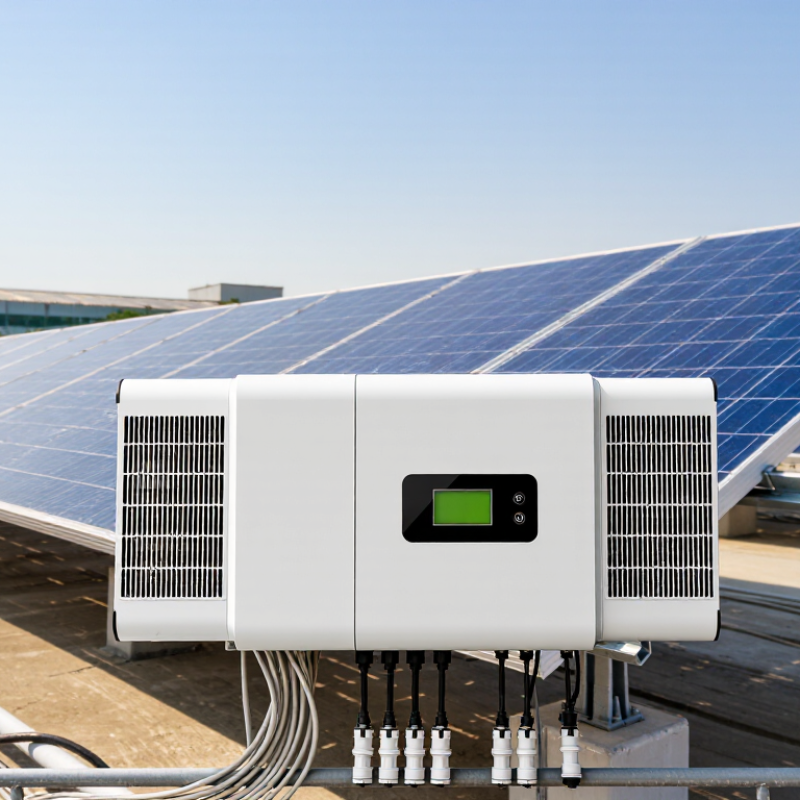
Choosing a 5KW Solar Inverter for a global project takes more than comparing prices. Buyers should check continuous output, peak capacity, battery compatibility, and grid requirements. A unit may look suitable on a product sheet yet struggle with motor startup or hot, poorly ventilated conditions. Ask for test reports, warranty terms, and clear after-sales support. Details matter.

Solar researcher Dr. Martin Green is widely associated with photovoltaic research, but no verified statement from him on 5KW inverters is available here. Rather than invent a quotation, this guide follows a practical principle: “Match the inverter to the system, the site, and the load.” That means checking the actual appliance list, local operating conditions, and installation design before choosing a supplier.

For global buyers, supplier evaluation also involves communication, documentation, and spare-parts access. Request model-specific specifications, not broad claims about an entire product range. Confirm who handles technical questions after shipment. A small oversight can become a costly delay. No supplier is perfect, and a low quotation alone proves little. The sections ahead will help compare Chinese suppliers with clearer criteria—and identify questions buyers should not skip.
China Best 5KW Solar Inverter Supplier for Global Buyers?

What Defines a 5 kW Solar Inverter and Its Typical 230 V Output?

A 5 kW solar inverter is rated to convert up to about 5,000 watts of direct current into usable alternating current. Its 230 V output is a nominal voltage, not a promise that every home will receive exactly that reading at every moment. With a 5 kW load and a power factor near one, output current is roughly 21.7 amps. Actual current varies with the load and inverter settings.

In practice, check whether the unit is rated for continuous output or only a short peak. Confirm its AC output phase, frequency, permitted voltage range, and compatibility with the solar array or battery. A sunny midday can push generation toward the inverter’s limit, while heat may reduce available output. The 5 kW label alone does not reveal those details. I have seen buyers focus on wattage and overlook surge capacity; that is an easy mistake.

Tips: Compare the inverter’s datasheet with your expected loads. A kettle and air conditioner starting together can briefly demand more power than their running ratings suggest. Leave some margin, and have a qualified installer verify the wiring and protection devices. A little caution helps.

How Do Inverter Types Compare for Grid-Tied, Hybrid, and Off-Grid Use?

China Best 5KW Solar Inverter Supplier for Global Buyers?

For grid-tied homes, a 5kW inverter sends solar electricity directly to household loads and the public grid. It usually costs less because it needs no battery bank. However, it normally shuts down during grid failures for worker safety. The IEA Renewables 2024 report says solar provided about three-quarters of global renewable capacity growth in 2023. That growth increases demand for reliable grid integration, not merely low prices. In field checks, efficiency curves and cooling design often matter more than the headline efficiency figure.

Hybrid inverters connect solar panels, batteries, loads, and the grid in one control system. They can store midday energy for evening cooking, lighting, and refrigeration. This improves energy flexibility but adds battery losses, software settings, and replacement planning. Off-grid inverters work differently. They create their own stable voltage and frequency, then manage batteries and sudden loads, such as pumps or compressors. The Global Off-Grid Solar Market Report 2024 identifies continuing demand for decentralized power, especially where grid access remains limited. Yet a 5kW rating may not start a large motor reliably. That detail is easy to miss.

Tips: Ask suppliers for tested surge capacity, thermal derating data, MPPT voltage ranges, and independent safety certifications. Compare warranty terms, remote monitoring, and local service response times. The IEA PVPS Trends 2024 report shows rapid photovoltaic deployment worldwide, but fast growth does not guarantee careful installation. I would request real operating data from similar climates. Paper specifications can look perfect. Reality is less tidy.

5 kW Solar Inverter Types: Typical Capabilities

This chart compares common system architectures, not specific products. A value of 1 means the capability is typically supported; 0 means it is not typical. Grid-tied inverters generally export solar power but shut down during outages for anti-islanding safety. Hybrid inverters can manage batteries and provide backup when configured with suitable equipment. Off-grid inverters operate independently of the utility and typically use batteries. Features vary by model, installation, and local grid requirements.

Which Efficiency, MPPT, and Protection Ratings Matter to Global Buyers?

For global buyers, a 5 kW inverter’s efficiency rating matters most when it reflects real operating conditions. The IEA PVPS Trends 2024 report estimates that about 447 GW of solar capacity was installed worldwide in 2023. That expanding market makes consistent performance and clear test data important. Compare peak efficiency with weighted efficiency, which better reflects changing sunlight and household loads. Ask whether figures follow recognized test methods, such as IEC 61683. Numbers need context. A high peak value alone may not predict performance during cloudy mornings or low-power operation.

MPPT ratings deserve equal scrutiny. Check the operating-voltage window, startup voltage, number of trackers, and maximum input current against the planned panel strings. Two MPPTs can help manage panels on different roof faces, but only if string limits match. Review protection details, including surge protection, over-temperature response, anti-islanding, and the enclosure’s IP rating for the installation site. IEC 62109 covers inverter safety requirements; it does not guarantee suitability for every climate. Ask suppliers for test documentation and the exact conditions behind each rating. A specification sheet can still leave gaps. Compare it with the installer’s string design and expected site temperatures.

How Do IEC 62109 and Grid Codes Shape Inverter Safety and Compliance?

China Best 5KW Solar Inverter Supplier for Global Buyers?

For a 5 kW solar inverter, safety depends on more than its rated output. IEC 62109-1 sets general safety requirements for power converters, while IEC 62109-2 addresses inverter-specific risks. These include electric shock, fire, and hazards during maintenance. A compliant design should show clear isolation points, durable terminals, and readable warning labels. Small details matter.

Grid codes add another layer. They may specify voltage and frequency limits, anti-islanding behavior, and reactive-power response. Requirements differ by destination, so one test certificate may not satisfy every utility. IRENA’s Renewable Capacity Statistics 2024 reports that global solar capacity reached 1,419 GW in 2023, with 346 GW added that year. This rapid growth makes consistent testing and transparent documentation increasingly important. Still, paperwork alone cannot prove how an inverter behaves in a hot cabinet or during a voltage dip.

Tips: Ask for IEC 62109 test evidence, the applicable grid-code report, and the exact tested model number. Check that settings match the destination utility. Then review installation clearances and temperature limits. A useful question: who verifies settings after commissioning? It is easy to overlook. Proper compliance needs field checks, not just a certificate.

How Can Buyers Assess Suppliers, Warranties, and 5 kW System Compatibility?

Choosing a 5 kW solar inverter supplier takes more than comparing prices. Ask for the inverter’s test reports, installation records, and a written warranty that explains parts, labor, shipping, and claim response times. Check whether the warranty remains valid in the expected operating temperature and humidity. A vague promise is not protection. In practice, buyers should also request a sample commissioning checklist and confirm who handles technical support across time zones.

System compatibility matters just as much. A 5 kW inverter must match the battery voltage, solar-array voltage range, grid configuration, and expected peak loads. The IEA PVPS Trends report documents continued growth in global photovoltaic deployment, but a larger market does not guarantee every system is correctly designed. Ask the supplier for a single-line diagram and string-sizing calculations based on local conditions. Check surge capacity too: a pump or refrigerator may draw more power at startup than its normal rating suggests. Small details count.

Tips: Compare warranty terms line by line, not just by years. Request references for installations with similar climates and loads. Have an independent installer verify the design before purchase; supplier calculations can still miss a site-specific constraint.