- Home
- About Us
- Products
- Total Solution
- News
- Blog
- Contact Us
Leave Your Message
-
-
Phone
-
E-mail
-
Whatsapp
-
Whatsapp

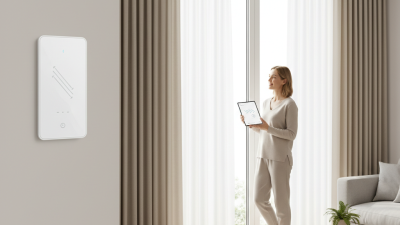
Choosing the China Best Smart Curtain Switch for Global Buyers requires more than comparing prices and product photos. A reliable Smart Curtain Switch should match local voltage, wiring systems, curtain motor types, and preferred control platforms. Buyers should check whether a neutral wire is required. They should also confirm compatibility with Google Home, Amazon Alexa, Apple Home, or other ecosystems. Small details matter. A switch may look modern but fail in older homes.
From practical product evaluations, stable performance depends on several visible factors. Look for clear installation instructions, responsive buttons, secure app connections, and overload protection. Certifications relevant to the destination market can support safer purchasing decisions. However, certification claims should be verified through official documents, not marketplace descriptions alone. Wi-Fi models may suit simple apartments, while Zigbee or Matter-compatible options can provide better integration in larger smart homes. The best choice is not always the most expensive model. It is the one that works consistently behind the wall.
Global buyers should also examine after-sales support, firmware updates, warranty terms, and replacement availability. A delayed application can become frustrating when curtains stop halfway. That experience deserves attention. Some product tests may overlook noise, manual override, or installation difficulty. These weaknesses should be discussed honestly. Suppliers with transparent specifications and responsive technical teams usually inspire greater confidence. This guide compares key features, practical installation concerns, and supplier reliability to help buyers make a more informed decision. Expectations must remain realistic. No Smart Curtain Switch fits every home.
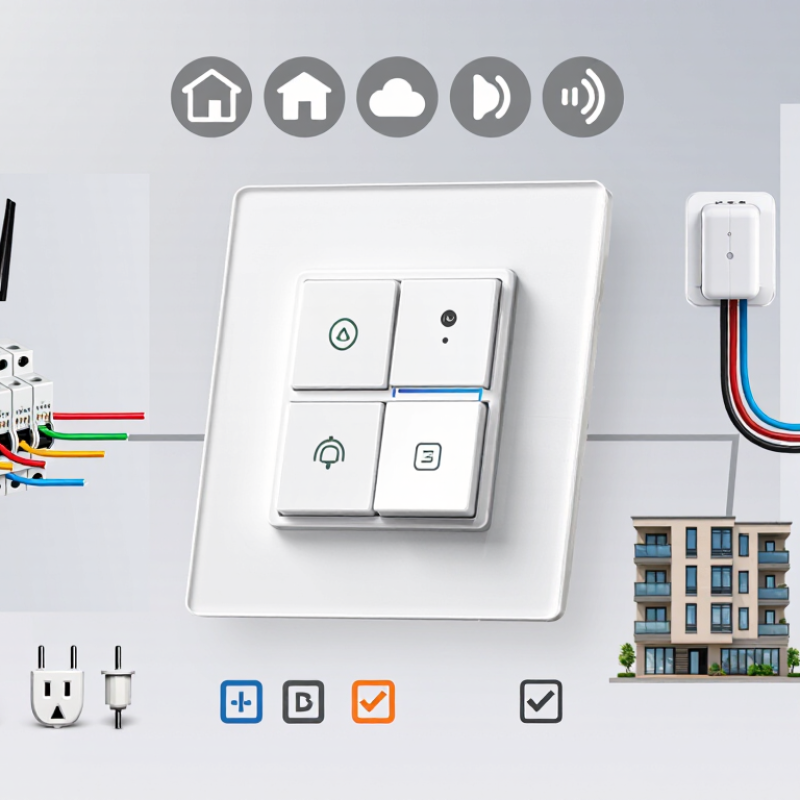
A suitable smart curtain switch must work across homes, climates, and electrical systems. Global buyers need more than remote control. They need reliable compatibility.
The International Telecommunication Union reported that 5.4 billion people used the internet in 2023. This connected market still includes older apartments and unstable networks. Therefore, a strong switch should support Wi-Fi and manual control. Local operation matters during router failures. It should also handle common voltage ranges, such as 100–240V and 50/60Hz, where certified for each market. Installers should check neutral-wire requirements before ordering. That detail is often missed.
Mechanical compatibility is equally important. A curtain motor may use a track, rod, or tubular system. The switch must match the motor’s load, wiring, and control method. Open standards, where supported, can reduce dependence on one application. Yet universal compatibility is still an ambitious claim. Testing remains necessary.
Energy performance deserves attention. The United Nations Environment Programme reported that buildings consumed about 34% of global energy and produced 37% of energy-related and process emissions in 2022. Automated curtains can reduce heat gain and glare, but results depend on window direction, fabric, and scheduling. A useful switch should support temperature, light, and manual override settings. In practice, setup is rarely perfect. A simple calibration guide, multilingual instructions, and replaceable controls can prevent small errors from becoming daily frustrations.
| Evaluation Dimension | Global-Buyer Suitable Benchmark | Recommended Data or Specification | Why It Matters for International Projects | Verification Point Before Purchase |
|---|---|---|---|---|
| Input Voltage | Wide-range AC input | 100–240 V AC | Supports common residential electrical systems in North America, Europe, Asia-Pacific, and many other markets. | Confirm the voltage range printed on the product label and installation manual. |
| Power Frequency | Dual-frequency compatibility | 50/60 Hz | Reduces the risk of incompatibility between regions using 50 Hz and regions using 60 Hz electricity. | Check whether the 50/60 Hz rating applies to the complete switch assembly, not only the power adapter. |
| Curtain Motor Compatibility | Support for standard AC curtain motors | Separate open/close control; motor-load rating must be confirmed for the specific motor type and inrush current. | Curtain motors can have different wiring arrangements, starting currents, and control methods. | Match the switch wiring diagram with the motor manual and verify neutral, live, open, and close terminals. |
| Electrical Load Rating | Clearly declared motor-load capacity | A rating of 3 A or higher may be suitable for many residential applications, but motor loads require separate validation. | A relay rating stated only for resistive loads may not represent the safe capacity for inductive motor loads. | Request the motor-load rating, inrush-current limit, and applicable test conditions. |
| Neutral-Wire Requirement | Clear installation options | Prefer a model with a neutral-wire design; if no-neutral installation is supported, verify minimum load and bypass requirements. | Neutral availability differs between older and newer buildings. No-neutral designs may require additional components. | Confirm whether a neutral wire, capacitor, bypass module, or minimum motor load is required. |
| Wireless Connectivity | Stable operation on widely used networks | 2.4 GHz Wi-Fi is widely supported; local-control options such as Zigbee, Thread, or Matter can improve interoperability. | 2.4 GHz generally provides better indoor range than 5 GHz, while multi-protocol support can reduce platform dependence. | Check supported frequency bands, pairing method, local-control behavior, and router security requirements. |
| Smart-Home Interoperability | Open or documented ecosystem support | Prefer Matter support or documented integration with the target smart-home platform; voice control should be verified separately. | International buyers may use different ecosystems depending on region, property type, or project integrator. | Verify the exact supported ecosystem, firmware version, hub requirement, and available functions. |
| Manual Operation | Works without cloud access | Physical open, stop, and close controls should remain available during internet or cloud-service interruptions. | Manual control improves safety, usability, and continuity in homes, hotels, and rental properties. | Test local buttons, power-recovery behavior, and operation when the internet connection is unavailable. |
| Power-Failure Recovery | Configurable restart behavior | Preferred options: retain previous state, remain off, or move to a defined state after power restoration. | Predictable recovery helps prevent unexpected curtain movement and supports automation schedules. | Confirm whether the recovery mode is configurable and whether calibration data is retained. |
| Safety and Compliance | Market-specific compliance documentation | Depending on destination, documentation may include CE, UKCA, FCC, ISED, RCM, or other applicable national approvals. | Electrical safety, electromagnetic compatibility, and radio requirements vary by destination market. | Request valid certificates, test reports, declaration documents, and the exact model number covered. |
| EMC and Radio Performance | Stable wireless performance in residential environments | Documented EMC and radio testing for the intended wireless technology and operating frequency. | Smart switches operate near routers, LED drivers, power supplies, and other potential sources of interference. | Check test reports and confirm that the radio module used in production matches the tested module. |
| Enclosure Protection | Suitable rating for the installation location | IP20 is generally intended for dry indoor locations; damp or outdoor locations require a higher, specifically verified IP rating. | Bathrooms, balconies, kitchens, and outdoor areas may expose the device to moisture or condensation. | Match the IP rating to the site conditions and follow the manufacturer’s installation restrictions. |
| Operating Temperature | Suitable for the project climate | A commonly useful indoor target is approximately −10°C to +40°C, subject to the product’s official specification. | Temperature affects electronics, wireless stability, relay performance, and enclosure materials. | Confirm the rated operating and storage temperature ranges for the actual installation environment. |
| Wall-Box Compatibility | Support for common regional wall boxes | Check compatibility with the target box type, mounting-hole spacing, device depth, and faceplate dimensions. | Wall-box formats and available installation depth differ between regions and building standards. | Compare technical drawings with the site’s wall box before ordering bulk quantities. |
| Installation Documentation | Clear multilingual documentation | Provide wiring diagrams, terminal definitions, safety warnings, pairing steps, reset instructions, and troubleshooting guidance. | Accurate documentation reduces installation errors and supports installers across different markets. | Review the manual before purchase and confirm availability in the required languages. |
| Privacy and Data Handling | Transparent data practices | Clearly explain account registration, cloud dependency, data location, permissions, encryption, and account deletion procedures. | Privacy expectations and data-protection obligations vary across jurisdictions. | Review the privacy policy, cloud-service terms, and whether core functions can operate locally. |
| Firmware and App Support | Defined long-term maintenance process | Document firmware-update methods, supported operating systems, release policy, and recovery procedure after failed updates. | Smart-home products may remain installed for many years, making software support important for security and compatibility. | Ask for the support period, update frequency, end-of-life policy, and offline fallback options. |
| Packaging and Logistics | Export-ready protection and labeling | Use protective internal packaging, model and voltage labels, installation documentation, and shipment carton identification. | Clear labeling reduces customs, warehouse, installation, and replacement errors in international supply chains. | Check carton dimensions, gross weight, barcode requirements, spare-part policy, and export documentation. |
| Quality Control | Traceable production testing | Recommended checks include insulation, dielectric strength, relay operation, wireless pairing, button function, and burn-in or functional testing. | Traceable testing helps control failure rates when products are shipped and installed far from the production site. | Request sample inspection records, test standards, lot traceability, and acceptance criteria. |
| Warranty and After-Sales Service | Written international support terms | Define warranty duration, replacement process, technical response time, spare-part availability, and return responsibility. | Remote projects need predictable support because on-site replacement can be expensive and time-consuming. | Confirm the warranty scope, exclusions, service contact, and process for handling defective units. |