How to Choose the Right Home Backup Inverter for Your Needs?
In today’s world, having a reliable Home Backup Inverter is essential for security and peace of mind. Experts agree that choosing the right model requires careful consideration of your specific needs. John Smith, a well-known authority in energy solutions, emphasizes, “Your home backup system should match your lifestyle and energy demands.”
Selecting the right Home Backup Inverter can feel daunting. Many factors come into play: power capacity, efficiency, and installation requirements. It's easy to overlook crucial details, which can lead to dissatisfaction later. Some users find themselves underpowered during outages, while others waste money on an oversized system.
A well-chosen Home Backup Inverter not only enhances resilience but also adds value to your home. However, it's essential to reflect on your energy usage patterns before investing. Ideally, the decision should be informed by both current needs and future aspirations. Balancing these elements can guide you toward a solution that truly meets your expectations.
Understanding Home Backup Inverters: Types and Their Functions
Home backup inverters serve a crucial role in maintaining power during outages. Understanding the different types is essential for making the right choice. The two primary types are sine wave inverters and modified sine wave inverters. Sine wave inverters provide clean and stable power, making them ideal for sensitive electronics. On the other hand, modified sine wave inverters are less expensive and suitable for simple devices. However, they may not be reliable for all applications.
When selecting an inverter, consider your appliances' power requirements. Assess wattage needs and peak surge capacity. It's crucial to ensure your inverter can handle the load. Some users underestimate their power needs, leading to unexpected failures. While many inverters promise reliability, not every model delivers. Reading reviews and seeking expert opinions can improve your choice.
Reflect on your priorities. Do you need portability or stationary power? Are energy efficiency and noise levels important? Take time to weigh these factors. A rushed decision might lead to regrets later. Understanding your specific needs will help you choose wisely.
Home Backup Inverter Types and Their Functions
This chart illustrates the efficiency ratings of different types of home backup inverters. Understanding these efficiencies can help you choose the right inverter based on your energy needs and preferences.
Key Factors to Consider When Selecting a Backup Inverter
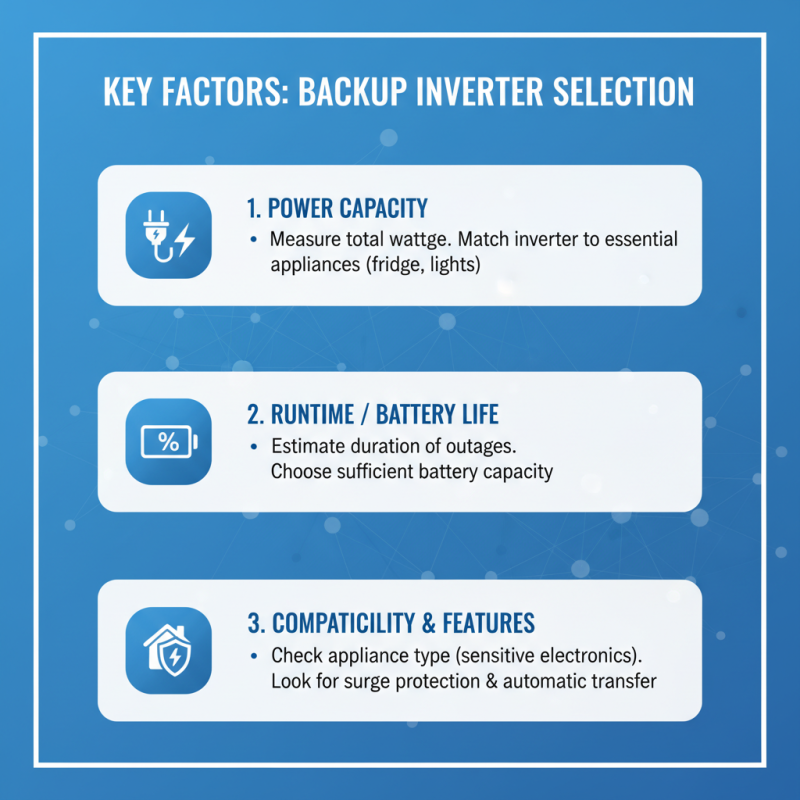
When selecting a backup inverter, consider several key factors. Start with power capacity. Measure your appliances’ total wattage to ensure the inverter meets your needs. A common mistake is underestimating power requirements. A well-calibrated inverter should support essential devices, such as refrigerators and lights, during outages.
Battery type is another critical factor. Lithium-ion batteries last longer and charge faster than lead-acid. However, lead-acid batteries are typically more affordable. Weigh longevity against initial cost. Maintain the inverter properly for optimal performance.
Tips: Regularly check connections and perform maintenance. An inverter functioning properly can prevent larger issues down the road. Additionally, consider the inverter's efficiency rating. Higher efficiency translates to lower energy loss. Understand that not all inverters are equal; some may not deliver what they promise.
Lastly, assess your space. Dimensions and weight of the inverter matter. Ensure you have enough room for ventilation. Sometimes, compact designs might compromise performance. Reflect on your specific needs to make an informed decision.
Determining Your Power Needs: Load Calculation Made Simple
Calculating your power needs is crucial when choosing a home backup inverter. Start by listing all your essential appliances. Consider devices like refrigerators, lights, and electronics. Each has a wattage requirement. This will help you gauge the total power needed.
Try to measure the startup wattage for appliances like motors and compressors. They often require more power initially. For example, a refrigerator may need three times its running wattage at startup. Keeping this in mind avoids underestimating your needs.
Use simple tools like a watt meter. It can provide accurate measurements of how much power each device consumes. This might reveal surprising insights about your usage. Take the time to assess your actual needs. This process can uncover patterns and preferences that you may not have noticed before.
Balancing your lifestyle with your power consumption is key. It's important to reflect on these habits and adjust accordingly.
Evaluating Battery Compatibility with Your Backup Inverter
When selecting a home backup inverter, battery compatibility is crucial. Inverters and batteries must work together efficiently. According to a report from the Energy Storage Association, over 70% of system failures stem from mismatched components. Understanding the specifications of both devices can enhance performance and longevity.
Consider the battery chemistry. Lithium-ion and lead-acid batteries have distinct requirements. Lithium-ion batteries charge rapidly and hold a higher capacity. Meanwhile, lead-acid batteries offer a more affordable option but require regular maintenance. It’s vital to match the inverter’s output with your battery's voltage and capacity to prevent inefficiencies.
Check the inverter's input options. Not all inverters support every battery type. Documentation from industry specialists suggests that inverters with adjustable settings may provide flexibility. However, this complexity can confuse inexperienced users. Potential buyers should research adequately and consider consulting professionals to ensure optimal pairing. It’s a proactive approach to avoid costly mistakes in the future.
How to Choose the Right Home Backup Inverter for Your Needs? - Evaluating Battery Compatibility with Your Backup Inverter
| Inverter Type |
Battery Type |
Capacity (Ah) |
Output Power (W) |
Voltage (V) |
Compatibility |
| Pure Sine Wave |
Lithium-ion |
100 |
1000 |
12 |
High |
| Modified Sine Wave |
Lead Acid |
150 |
800 |
12 |
Moderate |
| Pure Sine Wave |
AGM |
200 |
1200 |
24 |
High |
| Modified Sine Wave |
Gel |
100 |
600 |
12 |
Low |
Maintenance Tips for Ensuring Your Inverter's Longevity
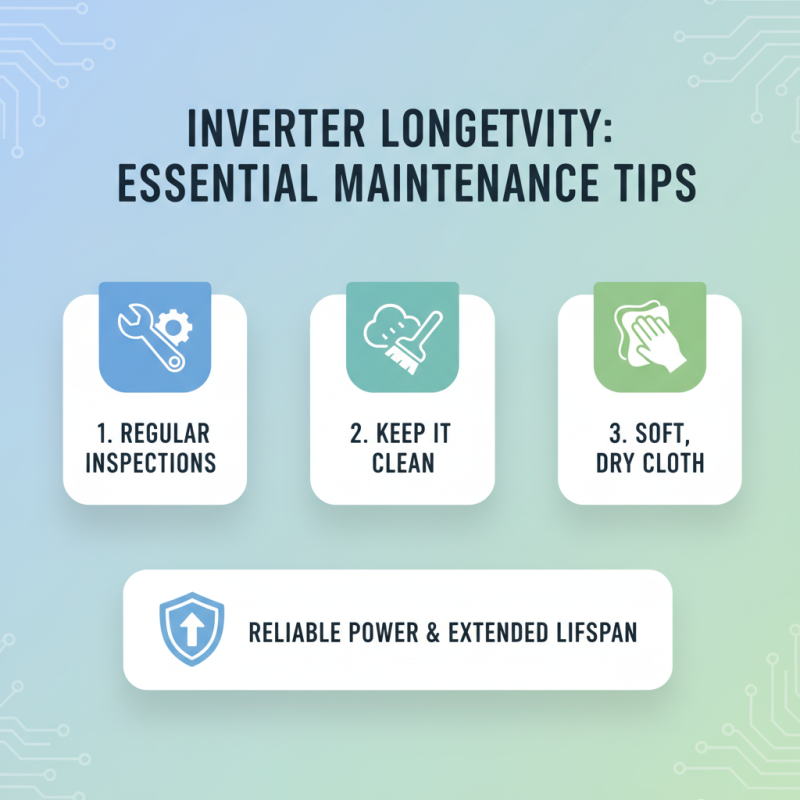
Maintaining your home backup inverter is essential for its longevity and efficiency. Proper care ensures reliable power when you need it most. Regular inspections are critical. Check for dust and debris that can accumulate over time. Clean the inverter’s surface using a soft, dry cloth. A clean unit operates better and lasts longer.
Battery health is equally important. Monitor the battery's charge levels regularly. If a battery shows signs of swelling or leakage, replace it immediately. Over time, batteries can lose capacity. It’s vital to understand their lifespan to avoid unexpected failures. Occasionally, perform a full discharge and recharge cycle; this can help reset the battery’s condition.
Temperature plays a significant role in inverter performance. Keep the inverter in a cool, dry place. Excessive heat can degrade components. Ensure adequate ventilation around the unit. It’s easy to overlook these factors, but they critically affect efficiency. Lastly, consult the user manual for specific maintenance guidelines. This document can provide valuable insights tailored to your inverter’s design. Applying these practices can help in maximizing the lifespan of your inverter.