How to Choose the Right Off Grid Inverter for Your Solar System?
Choosing the right Off Grid Inverter for your solar system can be challenging. With a growing demand for renewable energy solutions, the market has become flooded with options. According to the Solar Energy Industries Association, the solar industry grew by 43% in 2020. This growth emphasizes the need for efficient and reliable off-grid solutions.
Industry expert Dr. Emily Ramsay, a renowned authority in renewable energy systems, states, "Selecting the proper Off Grid Inverter is critical for optimizing solar energy usage." Her insights reflect a common concern among solar users. Many consumers struggle to understand inverter specifications and their impact on overall system performance.
A wrong choice could lead to energy inefficiency or system failures. It's essential to evaluate factors like inverter size, input voltage, and power rating. Understanding your energy needs and how the Off Grid Inverter fits into your system is crucial. Many buyers overlook these details, potentially compromising their energy independence goals. Focusing on quality can drastically enhance your solar experience.
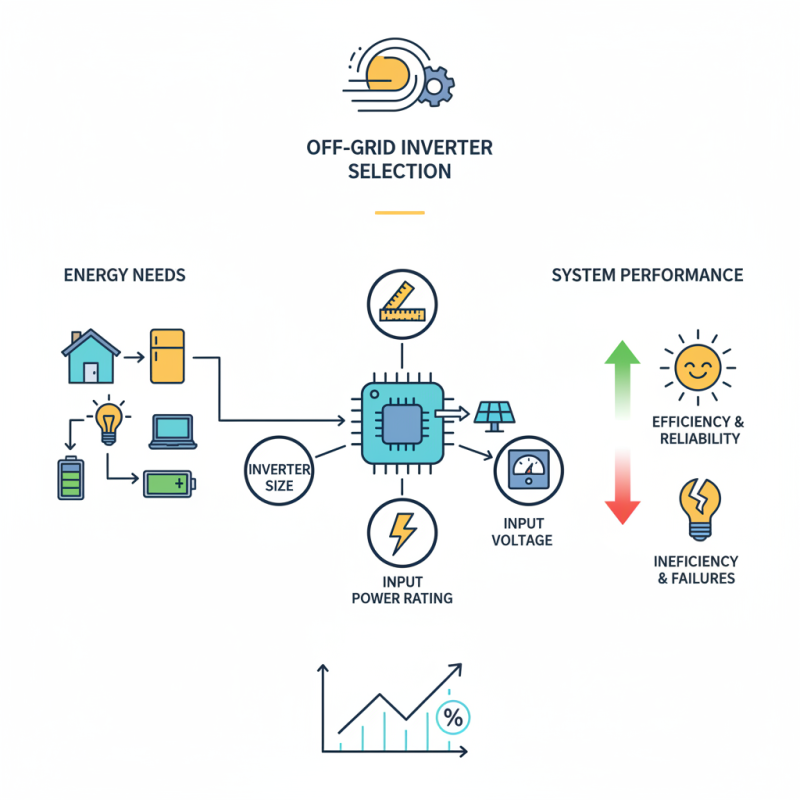
Understanding Off Grid Inverters: Key Functions and Features
Off-grid inverters are essential for converting solar energy into usable power. Understanding their vital functions can help you select the right model. One key feature is waveform type. Pure sine wave inverters provide the safest power for sensitive electronics. Modified sine wave inverters are cheaper but can cause issues with some appliances.
Consider your energy needs when selecting an inverter. Calculate your daily energy consumption. This will guide you in determining the inverter's capacity. A common mistake is underestimating energy use, which can lead to inefficiencies. Always choose an inverter with a bit more capacity than you think you need.
Tips: Assess the inverter’s efficiency rating. Higher efficiency means less energy loss. Look for features like battery charging capability and ease of installation. Some models have smart technology for better performance. Don't rush your decision; sometimes, doing more research reveals better options. Remember, investing time now can save money later.
How to Choose the Right Off Grid Inverter for Your Solar System? - Understanding Off Grid Inverters: Key Functions and Features
| Feature |
Description |
Importance |
| Power Output |
The maximum output power that the inverter can deliver. |
Essential for determining the load it can support. |
| Waveform Type |
Sine wave, modified sine wave, or square wave produced by the inverter. |
Pure sine wave inverters are more efficient and compatible with sensitive electronics. |
| Inverter Efficiency |
The ratio of output power to input power expressed as a percentage. |
Higher efficiency means less energy loss during conversion. |
| Input Voltage |
The DC voltage level that the inverter can accept from the solar panels or batteries. |
Must match the solar system and battery bank configuration. |
| Overload Capacity |
The ability to handle loads beyond its rated capacity for a short time. |
Important for starting heavy appliances that require more power initially. |
| Safety Features |
Protections against overload, short circuit, and over-temperature. |
Crucial for preventing damage to the inverter and connected equipment. |
| Size and Weight |
Dimensions and weight of the inverter. |
Important for portability and installation space considerations. |
Types of Off Grid Inverters Suitable for Solar Energy Systems
When choosing off-grid inverters for your solar system, it's essential to understand the types available. Off-grid inverters are primarily divided into three categories:
pure sine wave, modified sine wave, and grid-tie inverters designed for battery storage.
Pure sine wave inverters produce clean power, suitable for sensitive electronics.
Modified sine wave inverters are generally less expensive but may not power all devices efficiently. According to the Solar Energy Industries Association (SEIA),
pure sine wave inverters dominate 70% of the market due to their reliability and compatibility.
Another critical factor to consider is the inverter's efficiency rating. Generally, high-efficiency models exceed 90% effectiveness. This means
less wasted energy and improved battery life. If you're unsure about the type, consider your power needs and device compatibility. It might be valuable to consult professionals
who can analyze your energy consumption patterns.
Tips: Always check if the inverter can handle surge loads, which is essential for initial device startup.
Additionally, look for models with built-in protection features to prevent overheating and overcharging, enhancing safety. Reflect on your system's potential growth;
choosing an inverter with a higher capacity accommodates future expansion. Remember, the wrong choice may lead to insufficient power supply and unnecessary frustrations.
Factors to Consider When Choosing an Off Grid Inverter
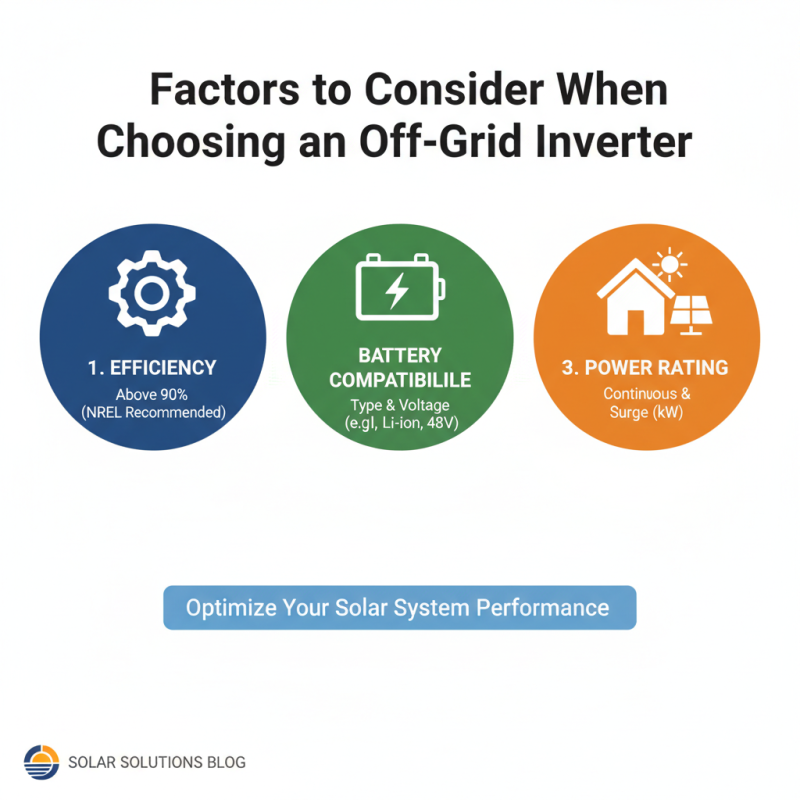
When choosing the right off-grid inverter for your solar system, several key factors come into play. Efficiency is critical. According to the National Renewable Energy Laboratory, a high-quality inverter should have an efficiency rating above 90%. Lower efficiency may lead to wasted energy and higher costs over time.
Consider the power output required for your needs. Calculate your daily energy consumption in watt-hours. The inverter should handle peak loads, often exceeding average daily use. For example, a household may need a 3000W inverter to run multiple appliances simultaneously. Additionally, note that many systems require a tolerance for surges, which typically range from 150% to 200% of the inverter rating.
Battery compatibility is another important aspect. Not all inverters work with every battery type. Lithium, lead-acid, and other technologies have distinct needs. Ensure the inverter supports your chosen battery system. Monitoring capabilities also matter. Some inverters offer real-time data. This feature can enhance energy management but may come with added costs. Balancing these aspects ensures a reliable and efficient off-grid solar power system.
Sizing Your Off Grid Inverter for Optimal Performance
When sizing your off-grid inverter, precise calculations are essential for optimal performance. An inverter that is too small may struggle to power your devices during peak demands. Conversely, an oversized inverter can lead to wasted energy and financial drawbacks. According to the National Renewable Energy Laboratory (NREL), properly sizing your inverter can enhance efficiency by up to 30%.
Start with your total energy needs. List all appliances and their wattage. Add up their running watts and account for surge watts. Common household items like refrigerators and power tools consume more energy at startup. A typical refrigerator might require 700 watts, with a surge of 2,100 watts. Be specific with your measurements; vague estimations can lead to inadequate setups.
Consider your solar power generation as well. The system should match the inverter’s capacity to ensure reliability. A report from the Solar Energy Industries Association (SEIA) highlights that 80% of off-grid users misjudge their energy requirements. This miscalculation directly affects their system's performance and reliability. Regularly reassess your energy consumption to adapt to any changes, ensuring your inverter continues to meet your needs effectively.
Off Grid Inverter Sizing for Optimal Performance
This chart illustrates the efficiency ratings of different off-grid inverter sizes. As the inverter size increases, the efficiency typically improves, making larger inverters more suitable for high-performance solar systems.
Installation and Maintenance Tips for Off Grid Inverters
When installing an off-grid inverter, ensure a proper location. It should be well-ventilated. Excess heat can reduce efficiency. Avoid areas with high humidity. Moisture can lead to malfunctions. Consider placing the inverter in a dedicated space. This protects it from dust and debris.
Maintenance is crucial for longevity. Regularly check the connections. Loose wires can cause voltage drops. Inspect the system for any signs of wear. Dust buildup can negatively affect performance. Cleaning the inverter regularly helps maintain its efficiency. Use a soft cloth to remove dust.
Some users overlook the importance of monitoring performance. Keeping an eye on the system’s efficiency can catch issues early. If you notice unusual noise or hot spots, investigate immediately. These can be signs of underlying problems needing attention. Tracking trends in performance helps make informed adjustments.