10 Essential Tips for Choosing a DC to AC Inverter for Your Needs?
Choosing the right DC to AC Inverter is crucial for various applications, from home energy systems to recreational use. According to a report by Allied Market Research, the global inverter market is projected to grow significantly, driven by increasing demand for renewable energy solutions and smart appliances. Selecting an inverter that meets your specific needs can be challenging.
You may find different types of DC to AC inverters available. The efficiency rating is an essential factor; many inverters operate at around 90% efficiency. However, some models may deliver less than expected. Additionally, the inverter’s power output must match your appliances to avoid underperformance. User reviews highlight that not all inverters live up to their specifications, leading to frustration.
Investing in a high-quality inverter often pays off. However, budget constraints may tempt consumers to choose cheaper options. This could result in overspending on replacements or repairs down the line. Understanding your needs and the available options will guide you in making an informed decision.
Understanding Inverter Types: Modified vs. Pure Sine Wave
When selecting a DC to AC inverter, understanding the two main types is crucial.
Modified sine wave inverters are more affordable.
They produce a square-like wave, which can power basic devices.
However, they may not work well with sensitive electronics.
These inverters can lead to overheating and inefficiency in some cases.
Pure sine wave inverters, on the other hand, mimic the power supply from a typical wall outlet.
They are more compatible with sensitive equipment.
Devices like computers and televisions perform better on this type.
However, they come at a higher cost.
If your needs include delicate electronics, investing in a pure sine wave model is wise, even if it feels like overkill at first.
When choosing an inverter, consider the power requirements of your devices.
Always check the wattage before purchasing.
Look into the inverter’s efficiency rating as well.
A higher rating can save you money in the long run.
If you're unsure, consult an expert.
They can help assess your unique needs.
Remember, the right inverter can make a significant difference in performance and reliability.
Key Specifications: Power Rating and Efficiency Metrics Explained
When choosing a DC to AC inverter, understanding power ratings is crucial. Power rating indicates how much power the inverter can deliver continuously. For efficient operations, look for inverters with a continuous rating that meets your device needs. According to industry data, mismatched power ratings can lead to overheating. This not only harms the inverter but also risks connected devices. It's vital to select inverters that offer a slight overhead in capacity. For example, if your load is 800 watts, consider an inverter rated for at least 1000 watts.
Efficiency metrics reflect how much of the input power is converted to output power. Higher efficiency means less wasted energy. Reports suggest that good inverters operate between 85% to 95% efficiency. It’s disheartening, though, that many budget options fall below this threshold. A lower efficiency can inflate energy costs over time. Therefore, while considering upfront prices, evaluate long-term operational costs as well. A 90% efficient inverter may seem pricey initially but could save you on your electricity bill compared to a 80% efficient one. Always factor these details into your decision-making process.
10 Essential Tips for Choosing a DC to AC Inverter for Your Needs
| Specification |
Description |
| Power Rating |
This indicates the maximum power output of the inverter, measured in Watts (W). Common ratings range from 300W to 5000W. |
| Efficiency |
The ratio of output power to input power, expressed as a percentage. Good inverters typically have efficiencies between 85% to 95%. |
| Waveform Type |
Inverters can produce pure sine wave, modified sine wave, or square wave output. Pure sine wave is more suitable for sensitive electronics. |
| Input Voltage |
The voltage of the DC input, usually 12V, 24V, or 48V for most inverters. |
| Cooling Method |
Some inverters use passive cooling (heat sinks) while others use active cooling (fans) for better thermal management during operation. |
| Overload Capability |
This indicates the inverter's ability to handle short bursts of power above its rated capacity, often useful for starting motors. |
| Protection Features |
Look for features such as overload, short circuit, over temperature, and low voltage protection to ensure safe operation. |
| Size and Weight |
Consider the physical dimensions and weight, which can affect portability and installation options. |
| Warranty |
Check the warranty period offered by the manufacturer, typically ranging from 1 to 5 years, which may indicate reliability. |
Battery Capacity Compatibility: Sizing Your Inverter Correctly
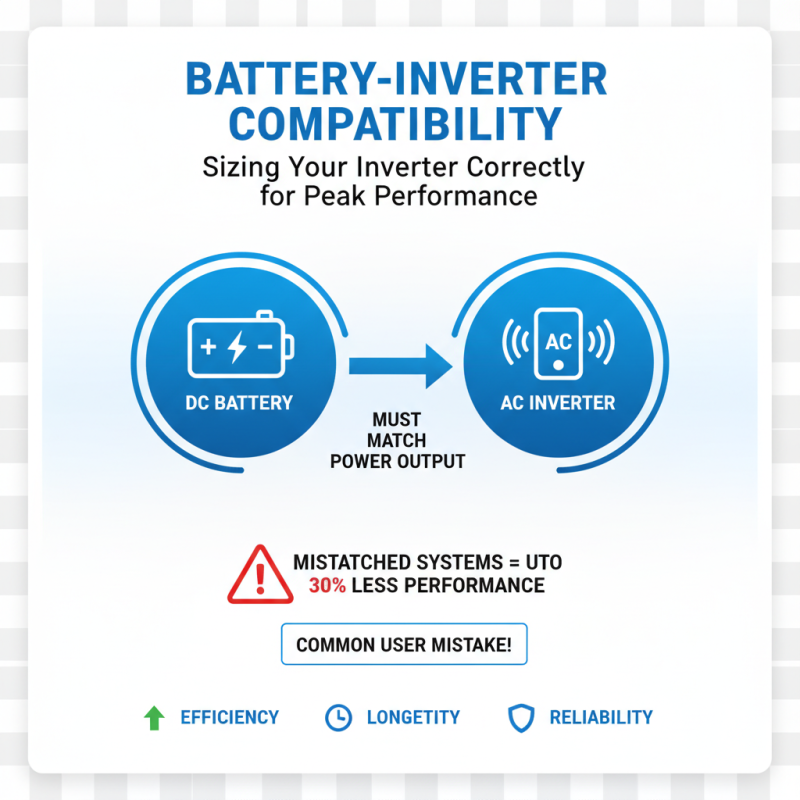
When selecting a DC to AC inverter, understanding battery capacity compatibility is vital. Your inverter must match the battery’s power output to function efficiently. Many users overlook this aspect, leading to system inefficiencies. According to industry reports, mismatched systems can yield up to a 30% reduction in performance.
A general rule of thumb is to ensure that the inverter’s capacity is at least 20% higher than the total load of your appliances. This accounts for the inverter's startup surge capability. For example, if your devices draw 800 watts, you should opt for an inverter rated at 960 watts or more. Additionally, battery capacity needs careful evaluation. A small battery may limit your inverter's performance over time.
Sometimes, users face unexpected challenges when using solar panels or wind turbines. These renewable sources may not provide consistent power. If your inverter is sized incorrectly for your batteries, you risk overcharging or draining them quickly. This can lead to premature battery failure. Experts advise keeping track of the battery's depth of discharge. Regular monitoring can prevent complications.
Safety Features: Importance of Overload and Short-Circuit Protection
When selecting a DC to AC inverter, safety features are paramount. Overload and short-circuit protection can prevent catastrophic failures. According to industry data, around 30% of inverter failures are due to overloads. An inverter with proper protection mechanisms can mitigate these risks effectively.
Consider an inverter with built-in overload protection. This feature automatically shuts down the inverter under excessive load conditions. It reduces the risk of fire and damage to connected appliances. Short-circuit protection works similarly. In the event of a short circuit, the inverter cuts off power almost instantly. This quick response can save not only the inverter but also invaluable appliances.
Look for inverters that also include alarm systems. These systems alert users to potential issues before they escalate. Regular maintenance checks are essential too. Faulty wiring or inadequate cooling systems can be overlooked. Ignoring these factors may lead to underperformance or even accidents. Always prioritize safety when making your choice.
Real-World Applications: Choosing Inverters for Home and RV Use
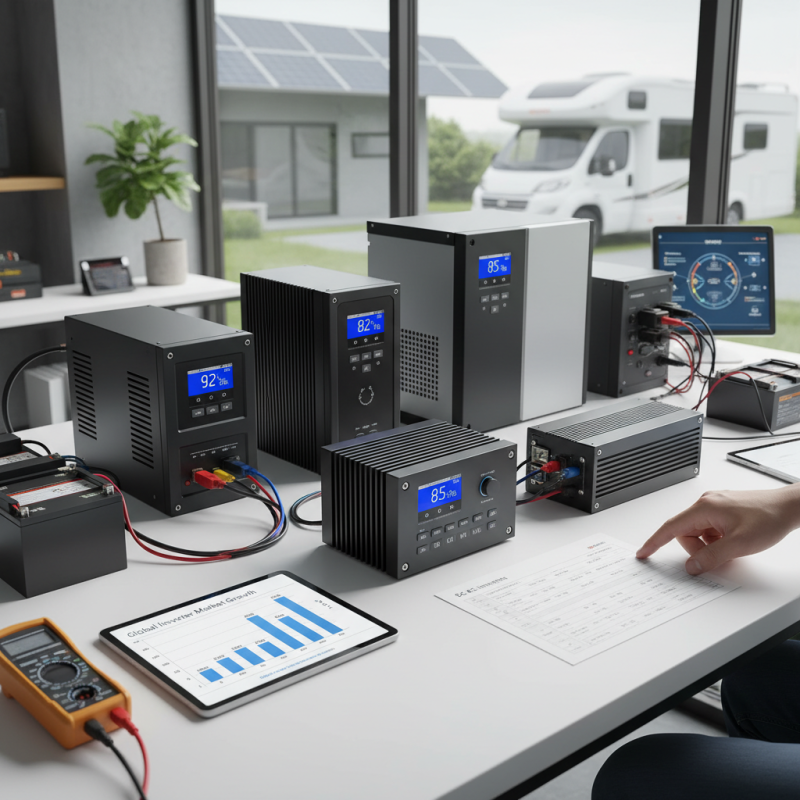
When choosing an inverter for home or RV use, it’s crucial to consider your power needs. Look at the devices you plan to run. A small inverter might suffice for charging phones or powering lights. However, for larger appliances, like a refrigerator or air conditioner, you’ll need something more powerful. Assessing your wattage requirements is vital. Always opt for an inverter that exceeds your total wattage needs to ensure stability.
Next, think about portability and installation. If you're using an inverter in an RV, weight and size matter. You want something that fits well in your space. Keep in mind that some inverters are easier to install than others. You might struggle with complex wiring if you're not handy. Also, consider noise levels. Some inverters are noisy while running, which can be distracting during a trip.
Finally, reflect on the inverter's durability and safety features. If you're going off the grid, you need a reliable power source. Look for features like overload protection and cooling fans. They can prevent failures. It’s always wise to delve into user reviews, as they can offer insight into real-world experiences. Is the inverter easy to use? Does it live up to its promises? These questions can guide you in making a more informed choice.