What is Zigbee Smart Home Technology and How Does it Work?
Zigbee Smart Home technology is transforming how we interact with our living spaces. This innovative system connects various devices, allowing seamless communication. Imagine turning on your lights or adjusting the thermostat, all with a simple command. Zigbee networks work using low-power radio signals, which helps save energy.
The beauty of Zigbee Smart Home lies in its flexibility. You can control everything from security cameras to smart appliances. However, there can be challenges. Interference from other devices may disrupt connectivity, which can frustrate users. Additionally, not all devices are compatible, limiting some people's options.
Expecting perfection in a smart home system may lead to disappointment. Sometimes, devices may not respond as expected. Understanding these limitations is part of enjoying Zigbee Smart Home technology. It's all about convenience, but users should remain aware of potential hiccups in their daily routines.
Overview of Zigbee Smart Home Technology
Zigbee smart home technology has gained popularity due to its simplicity and efficiency. This wireless communication protocol allows devices to connect seamlessly. It uses low energy, which helps save battery life. Devices can communicate over distances of up to 100 meters in open air.
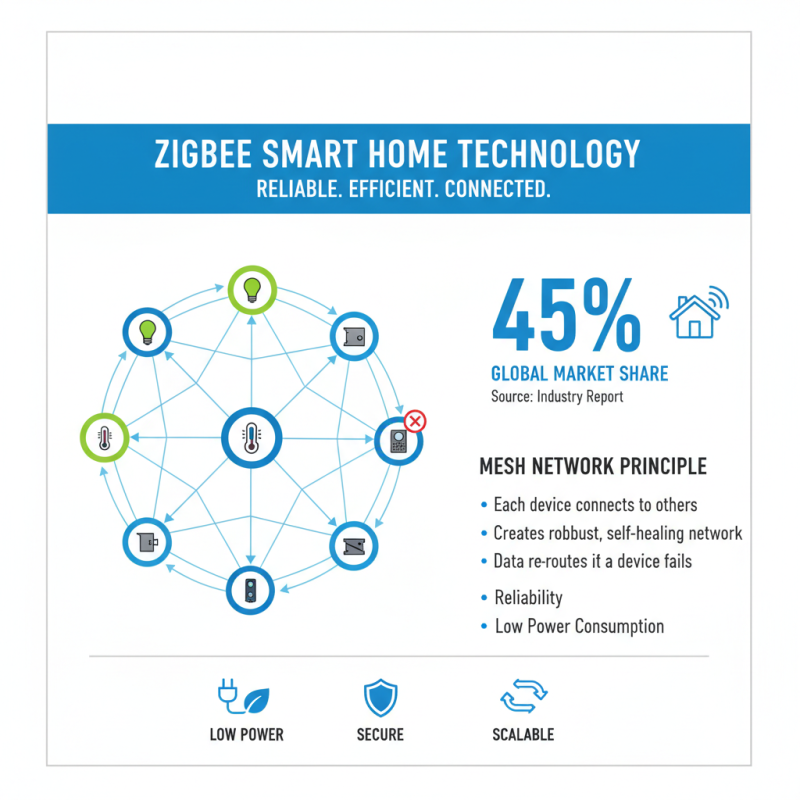
Each device acts as a node in a network. This creates a mesh network, enhancing reliability. If one device fails, others can still relay messages. Many users find this feature comforting, but it can also create complexities. Setting up the network might be confusing for beginners.
The ability to control lights, sensors, and appliances remotely appeals to many homeowners. However, users need to ensure their devices are compatible. This can lead to frustration if mismatched products are purchased. Zigbee's flexibility is a big draw, but also a source of reflection. Is the convenience worth the potential hassle? Sometimes, the tech can be overwhelming rather than liberating.
Key Features of Zigbee Protocol in Smart Homes
Zigbee is a popular protocol for smart home technology. Its key features make it ideal for connecting devices in a home. One main aspect is its low energy consumption. This is vital for battery-operated devices, allowing them to last longer without frequent replacements. Zigbee operates on a mesh network. This means devices can communicate with each other, extending coverage throughout the house.
One interesting feature is its ability to support a large number of devices. Up to 65,000 devices can be linked in a Zigbee network. This provides flexibility for homeowners to expand their smart home systems over time. Zigbee also emphasizes security. It uses encryption to protect data, ensuring a safer environment for users.
**Tip:** Regularly update your devices to maintain security.
Another notable element is the low latency of Zigbee devices. This leads to faster response times when you command your smart gadgets. However, it's important to ensure devices are compatible with each other. Occasionally, you may find different brands struggle to connect seamlessly.
**Tip:** Check compatibility before purchasing new devices. This could save you time and hassle. Always consider that not all devices may work as expected within the Zigbee framework. Testing different configurations might be necessary.
How Zigbee Devices Communicate with Each Other
Zigbee smart home technology operates on a mesh networking principle. Each device, or node, communicates with others, creating a robust network. This means that even if one device fails, others can still pass data. According to a recent industry report, Zigbee accounts for 45% of the global smart home market due to its reliability and low power consumption.
Zigbee devices use the IEEE 802.15.4 standard for communication. They listen, send, and receive packets of data. When a command is given, a device sends a signal to a coordinator, which relays it to the intended target. It’s efficient, but latency can sometimes occur. Users might experience a slight delay when units are under heavy load.
**Tip:** Keep your Zigbee devices within close range for optimal connectivity. Too much distance can weaken the signal.
Not all devices play well together. Some might require specific settings. It’s essential to be aware of compatibility issues. Testing configurations in small batches can save time and effort.
**Tip:** Regularly update device firmware to ensure smooth communication. Sometimes, updates fix existing bugs that affect performance.
Benefits of Using Zigbee for Home Automation
Zigbee technology offers unique benefits for home automation. Its low energy consumption is a standout feature. According to a recent market report, devices using Zigbee can operate for years on a single battery. This efficiency makes it ideal for sensors and smart devices in homes.
Zigbee also provides strong network reliability. With a mesh network, each device can communicate with others. This extends the range and enhances connectivity. A study shows that Zigbee networks can support over 65,000 devices without significant performance loss. Such scalability is crucial as homes become more automated.
Moreover, the security of Zigbee is noteworthy. It employs AES-128 encryption, offering protection against unauthorized access. However, users must still remain cautious. Regular updates and secure passwords are essential for maintaining safety. Overall, while Zigbee presents many advantages, careful implementation is necessary to mitigate risks.
Challenges and Limitations of Zigbee Technology
Zigbee technology offers numerous benefits for smart home users, but it also faces challenges and limitations. One primary concern is range. Zigbee operates on low power, allowing for longer battery life, but it may struggle in larger homes. Walls and obstacles can weaken signals, creating dead zones.
Security is another issue. While Zigbee uses encryption to protect data, vulnerabilities still exist. Hackers could exploit these weaknesses if devices are not properly configured. Users must stay informed about security updates and follow best practices.
**Tips:** Always change default passwords on devices. This small step can significantly enhance security.
Interoperability can be problematic as well. Not all Zigbee devices communicate seamlessly with each other. Users might face compatibility issues, limiting their smart home options. It’s crucial to check for compatibility before investing in devices.
**Tips:** Research devices thoroughly before purchase. This helps avoid future headaches.
Inconsistent performance can arise from network congestion. With many devices using the same frequency, slow responsiveness may occur. Users may experience delays or interruptions. Reflecting on the layout and number of devices can help mitigate this issue.
What is Zigbee Smart Home Technology and How Does it Work? - Challenges and Limitations of Zigbee Technology
| Feature |
Description |
| Connectivity Range |
Typically up to 100 meters indoors and 300 meters outdoors. |
| Power Consumption |
Low power consumption, making it suitable for battery-operated devices. |
| Network Size |
Supports mesh networks of up to 65,000 devices. |
| Data Rate |
Data rates up to 250 kbps. |
| Frequency Band |
Operates on 2.4 GHz, 868 MHz, and 915 MHz frequency bands. |
| Security |
Uses AES-128 encryption for secure data transmission. |
| Interoperability |
Compatible with various devices from different manufacturers in Zigbee Alliance. |
| Limitations |
Shorter range compared to other protocols like Z-Wave; potential interference on the 2.4 GHz band. |