How to Choose the Best Portable Power Inverter for Your Needs?
Choosing the right Portable Power Inverter is essential for anyone who uses devices on the go. Whether you're camping, traveling, or working remotely, this versatile tool can ensure you have power when you need it most. Many people struggle with selecting the best model for their needs. The market is flooded with options, each claiming to be superior. This creates confusion, and it's easy to make mistakes.
A Portable Power Inverter converts DC power from your vehicle or battery into AC power. Understanding the types available can greatly impact your choice. You might need one for small devices like phones or larger equipment like a fridge. Knowing your wattage requirements is crucial here, as underestimating them can lead to frustration.
Quality is not always guaranteed. Some brands boast high performance but fail when it matters. Checking reviews and ratings can provide insight into reliability. What works for one person may not work for another. Reflect on your specific power needs and usage scenarios. This process is vital for making a wise investment in your essential equipment.

Understanding the Basics of Portable Power Inverters
Portable power inverters are vital tools for anyone looking to provide electricity on the go. They convert direct current (DC) from batteries into alternating current (AC), making it possible to power devices like laptops, lights, and small appliances. This functionality is crucial for camping, road trips, or emergency power outages. Understanding the basics helps you pick the right inverter for your needs.
When choosing an inverter, consider its wattage capacity. It should effectively handle the total wattage of your devices. Look for converters with a clear wattage rating. Continuous and peak wattage are important factors. Continuous wattage tells you how much power it can provide continuously. Peak wattage indicates how much power it can handle for a short time, which is useful for devices with high start-up power needs.
Efficiency is another aspect to ponder. A more efficient inverter reduces energy loss. However, efficiency may vary based on load and inverter type. Some models may look appealing but fall short in real-world use. Regular testing and feedback from users can shed light on these issues, revealing their real strengths and weaknesses. Don't overlook these details when making a purchase; they can significantly impact your experience.
Identifying Your Power Needs and Requirements
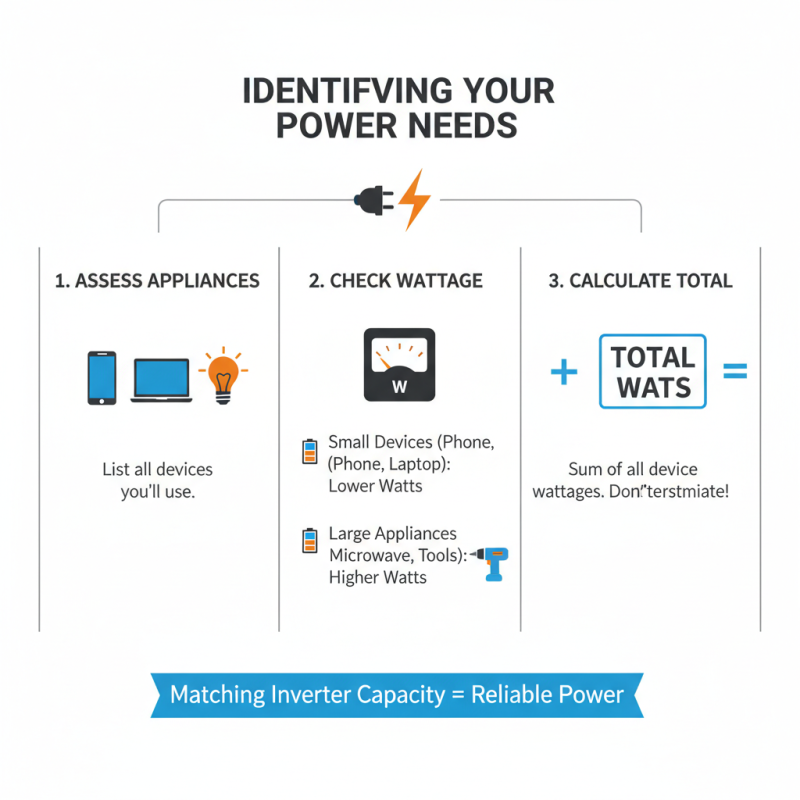
When selecting a portable power inverter, it’s crucial to identify your specific power requirements. Begin by assessing the appliances you plan to use. A power inverter's capability is often measured in watts. If you're powering a few small devices, like a phone or laptop, a lower wattage inverter could suffice. However, larger appliances, like microwaves or power tools, demand significantly more power. Check the total wattage of your equipment to avoid underestimating your needs.
Consider the inverter's input and output options. Does it have enough ports? Are they the right type for your devices? Moreover, think about the inverter's portability. A heavy unit might not be practical for camping trips or road trips. Reflect on where you will be using it most frequently. Weight and size can make a big difference in usability. You may find that a slight compromise on power capacity can lead to a more convenient choice.
Furthermore, evaluate the durability and reliability of the inverter. Look into user reviews and feedback. A power inverter is an investment, and not all models are created equal. Sometimes, cheaper options can cause more issues than they solve. Think critically about your choices, and research thoroughly. Your power needs should drive your decision, guiding you towards a reliable and efficient inverter.
Assessing Inverter Types and Specifications
When choosing a portable power inverter, understanding inverter types is crucial. Two main types exist:
modified sine wave inverters and pure sine wave inverters.
Modified sine wave inverters are usually less expensive but may not power sensitive electronics effectively.
Conversely, pure sine wave inverters provide stable power for delicate devices.
A report from the National Renewable Energy Laboratory highlights that pure sine wave inverters are
20% more efficient for critical loads.
Specifications are key when evaluating inverters. Look for wattage ratings to determine how much power you need.
Many people underestimate their requirements. For example, a small refrigerator might need 800 watts to start
and 200 watts to run. Another important metric is the inverter's
surge capacity. This indicates how much power it can supply temporarily.
According to industry data, inverters with at least double the total wattage can handle surge demands better.
Tips:
Ensure the inverter has adequate USB ports for charging devices. Also, check the weight and size if portability is a priority.
After assessing these factors, consider how often you’ll move the inverter.
It’s essential to rethink the criteria based on your future needs. Understanding your energy demands can lead to better choices.
Evaluating Features for Ease of Use and Safety
When selecting a portable power inverter, ease of use and safety are paramount. Look for inverters with clear, user-friendly controls. Simple designs reduce the chance of errors. An intuitive interface allows quick adjustments during operation. Safety features are vital too. Overload protection can prevent damage to both the inverter and devices. Furthermore, consider inverters that have short-circuit protection to avoid electrical hazards.
Heat management is another significant aspect. High-performance inverters can overheat during use. Models with built-in cooling systems can mitigate this risk effectively. A noisy fan may become bothersome. Selecting a quieter option can enhance your experience. Additionally, check the inverter's surge capacity. This indicates how much power it can handle initially. Underestimating this can lead to unexpected challenges.
Portability may affect how frequently you'll use an inverter. A lightweight model is easier to transport, making it ideal for camping or road trips. However, lighter units sometimes compromise on power output. Finding the right balance between weight and performance requires careful consideration. Reflect on your specific needs and usage scenarios to avoid disappointment.
Comparison of Portable Power Inverter Features
Comparing Brands and Prices for the Best Value
When choosing a portable power inverter, comparing brands and prices is essential. Various options are available, each with unique features and price points. Start by identifying your power needs. Consider the wattage you require. Some devices may only need a few hundred watts, while others could demand over a thousand. This distinction is crucial for making an informed choice.
Price is not always an indicator of quality. Some expensive inverters might not perform better than mid-range models. Examine the specifications and customer reviews instead. Look for feedback on reliability and efficiency. A cheaper model can sometimes serve your needs just as well if it meets the required specifications.
Brand loyalty can cloud judgment. Remember that even lesser-known brands can offer competitive performance. Focus on the warranty and customer service, as these can reflect the company's commitment to reliability. Avoid getting swayed solely by popular brands. Assess the long-term value instead, as investing wisely can save you money and hassle later.