How to Choose the Best Portable Power Inverter?
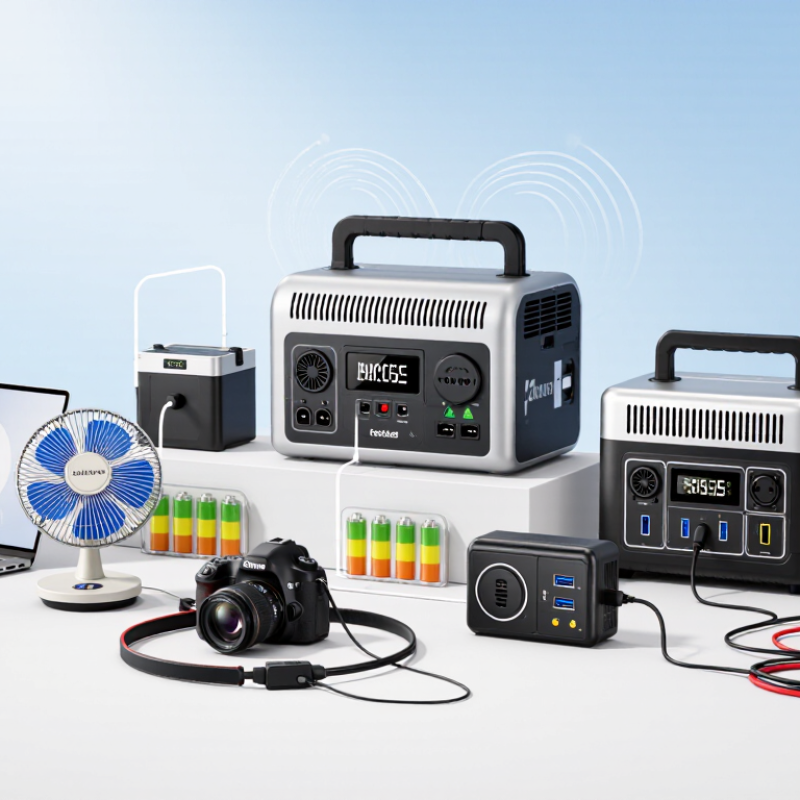
Choosing the best Portable Power Inverter is not simply about buying the highest wattage model. The right option depends on your devices, battery source, travel habits, and safety expectations. A compact inverter may run a laptop, camera charger, or small fan comfortably. It may fail, however, when powering a refrigerator or high-startup motor.
The choice is personal. Begin by checking continuous wattage and peak surge capacity. These figures show whether the inverter can handle both normal use and sudden startup demands. Pure sine wave output is usually preferable for sensitive electronics, although some basic devices work with modified sine wave models. Pay close attention to battery compatibility, cable length, ventilation, noise, USB ports, and built-in overload protection. Small details matter.
Reliable evaluation also requires more than reading attractive product claims. Compare independent test results, manufacturer specifications, warranty terms, and user feedback from similar applications. Look for recognized safety testing where available in your region. A model designed for occasional camping may not suit daily emergency backup use. That difference is easy to miss.
There is no perfect inverter for everyone. A common mistake is choosing extra capacity without considering battery drain, heat, and portability. Another is ignoring the cables, which can become warm under heavy loads. This guide examines practical selection criteria, realistic power calculations, and common purchasing errors. It aims to make the decision clearer, while admitting one limitation: specifications cannot predict every condition in your home, vehicle, or outdoor setup.
Understanding Portable Power Inverter Types and Core Functions
Choosing the Best Portable Power Inverter
Understanding Portable Power Inverter Types and Core Functions
A portable power inverter converts battery power from DC into household AC power. Its type determines which devices it can safely operate. Pure sine wave inverters produce smooth electricity, similar to wall outlets. They suit laptops, medical equipment, audio systems, and sensitive chargers. Modified sine wave models cost less, but some devices may hum, heat up, or perform poorly. I once tested one with a small fan. The fan worked, but its motor sounded rough.
Power ratings require careful attention. Continuous wattage shows the load the inverter can support steadily. Surge wattage covers the brief startup demand of motors and compressors. Add the running watts of your devices, then allow extra capacity. Do not rely only on the largest number printed on the casing. It can be misleading.
Efficiency also affects real use. An inverter with lower losses preserves more battery capacity. Check its input voltage, output sockets, USB ports, cooling fan, and cable length. Essential safety functions include overload, short-circuit, thermal, and low-voltage protection. Keep airflow clear. Heat reduces reliability. In my experience, a quiet inverter is not always the coolest one; silent operation may hide reduced airflow. I would now choose measured performance over attractive specifications. Test the actual load before depending on it during travel, outdoor work, or an outage. Batteries drain faster than expected.
How to Choose the Best Portable Power Inverter?
Understanding Portable Power Inverter Types and Core Functions
The chart shows representative power levels for common portable inverter classes. Continuous output indicates the load an inverter can support during normal operation, while surge output represents the short-term starting power available for devices such as refrigerators, pumps, and power tools. Pure sine wave inverters are generally preferred for sensitive electronics, whereas modified sine wave models are often suitable for basic resistive loads.
Assessing Your Power Needs, Device Loads, and Runtime Requirements
How to Choose the Best Portable Power Inverter?
Start with the devices you genuinely need, not the appliances you hope to run. List each device’s running watts, starting watts, and operating hours. A small refrigerator may draw modest power continuously, yet its compressor can demand several times more during startup. Check the rating label, then confirm it with a plug-in power meter. Guesswork is risky.
The U.S. Energy Information Administration’s 2020 Residential Energy Consumption Survey reports average household electricity use of about 886 kilowatt-hours monthly. That equals roughly 29 kilowatt-hours daily, far beyond most portable systems. Therefore, calculate only essential loads. Use this estimate: required watt-hours equal watts multiplied by hours, divided by inverter efficiency. A 60-watt device running for five hours needs about 300 watt-hours before losses. Add a practical reserve of 20 to 30 percent. Even then, runtime can change with temperature, battery age, and conversion losses. My first estimate would still be provisional.
Tips:
Group devices by priority. Test the inverter at home before an outage. Select continuous output above your total load, and surge output above the highest startup demand. The International Energy Agency notes that efficient appliances reduce electricity consumption and operating costs, but efficiency labels do not reveal startup surges. Do not ignore that gap. A quiet fan may run for hours; a heating element can empty a battery quickly. Check the numbers twice.
Comparing Output Waveforms, Power Ratings, and Battery Compatibility
Choosing a portable power inverter starts with its output waveform. Pure sine wave output closely resembles household electricity and suits sensitive electronics, induction motors, medical equipment, and audio systems. Modified sine wave models may cost less, but they can cause buzzing, extra heat, or unreliable motor starts. IEEE power-quality guidance emphasizes controlling harmonic distortion, although household loads vary. I would not trust a waveform label alone; check the manufacturer’s measured total harmonic distortion.
Power ratings need two numbers: continuous watts and surge watts. A 500-watt load running for two hours needs about 1,000 watt-hours. With 90% inverter efficiency, the battery should provide roughly 1,110 watt-hours. NREL’s 2024 Annual Technology Baseline reports approximately 85%–95% round-trip efficiency for lithium-ion storage systems, but portable units may perform worse under heavy loads. Brief surges matter.
Battery voltage is equally important. A 1,000-watt load can draw about 93 amps from a 12-volt battery before losses. That is substantial. Match the inverter to the battery’s nominal voltage, chemistry, maximum discharge current, and battery-management system. Lithium batteries are lighter, but their protection systems may disconnect suddenly. Lead-acid batteries tolerate different conditions, yet usable capacity is lower. I have seen “compatible” setups fail because cables were too thin or the battery was cold. Read the actual current limits, not just the capacity label.
Selecting the Best Inverter for Your Budget and Intended Applications
Choosing the best portable power inverter starts with your application, not its advertised wattage.
For a laptop, camera, or medical device, calculate running watts and add starting demand. Refrigerators and pumps may briefly need two to three times their rated power. A pure sine wave output is safer for sensitive electronics. It also reduces unwanted buzzing.
Budget matters, but cheap capacity can become expensive. The International Energy Agency reported that global battery demand for the energy sector exceeded 750 GWh in 2023. This growth improves availability, yet battery quality still varies widely.
Check usable watt-hours, recharge time, cooling design, and cycle-life testing. A 500 Wh unit running a 60 W laptop may provide roughly seven hours after conversion losses. Real use is messier. I once underestimated losses during cold-weather testing.
Tips:
Match continuous output to your normal load. Keep at least 20% spare capacity. For outdoor work, inspect the enclosure rating and cable length. For household backup, compare transfer features and neutral-ground design. Look for testing against IEC 62109 or equivalent safety requirements. Independent certification is more useful than impressive packaging.
For a modest budget, choose fewer outlets but stronger electrical protection. For frequent travel, prioritize weight, USB-C output, and fast charging. For emergency use, prioritize battery reserve and low standby consumption.
The U.S. Department of Energy notes that inverter efficiency changes with load, so published peak efficiency can mislead. Test the inverter with your actual devices before depending on it.