- Home
- About Us
- Products
- Total Solution
- News
- Blog
- Contact Us
Leave Your Message
-
-
Phone
-
E-mail
-
Whatsapp
-
Whatsapp

A Smart Light Switch can look simple on a showroom wall: a clean faceplate, one small status light, and a button that clicks softly. Yet choosing a reliable model involves more than appearance. Buyers must consider wiring requirements, load compatibility, app stability, voice-assistant support, and what happens when the home Wi-Fi drops. Small details matter. A switch that loses its schedule after a router restart can quickly become frustrating.
This guide examines China’s top 10 Smart Light Switch manufacturers through practical criteria: product range, manufacturing capability, certifications, customization options, and support for overseas buyers. It also considers everyday use, such as whether the physical button still works intuitively for a guest or an older family member. Brand claims deserve scrutiny. Product specifications and test results are more useful than polished catalog photos.
One useful evaluation principle is: “A smart switch should make ordinary lighting easier, not add another daily task.” This is an editorial benchmark, not a verified quotation from a named industry expert. That distinction matters. Without a reliable source for an expert’s exact words, presenting an invented quote as fact would mislead readers. The comparison therefore focuses on verifiable product and supplier details, while recognizing that no single manufacturer is the best fit for every project.
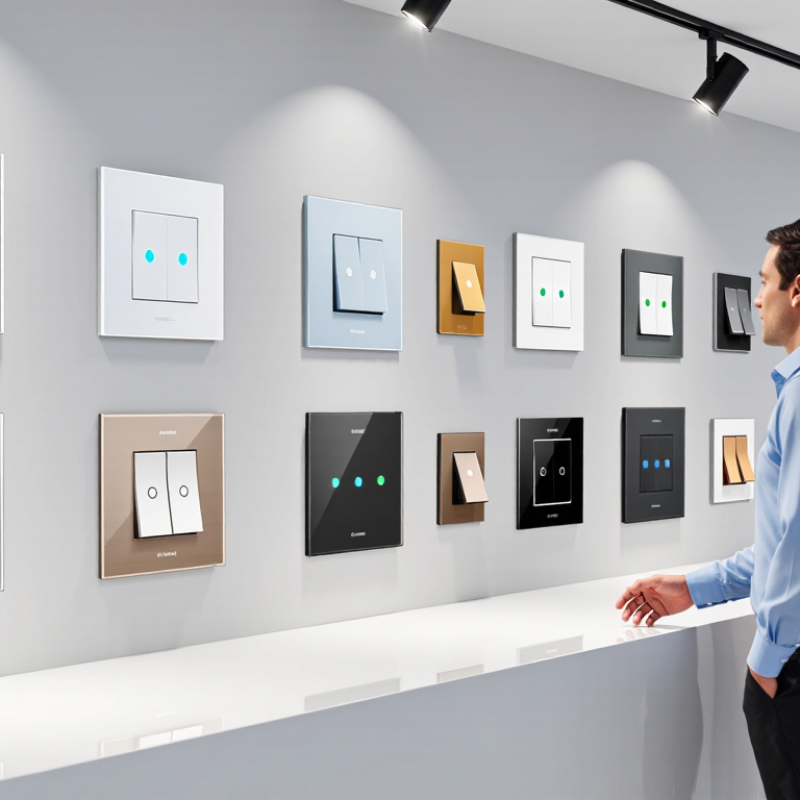
A smart light switch is a wall-mounted control that connects lighting to a home network. Unlike a traditional switch, it contains a small relay, processor, and communication module. The relay opens or closes the circuit when you tap the panel or use an app. The wall plate stays familiar.
Some models use Wi-Fi, while others communicate through low-power mesh protocols. After installation, users can set schedules, control lights remotely, or connect motion sensors. A hallway light might turn on at 7 p.m. and dim after midnight. Local control is also valuable because the light should still work when the internet fails. That detail is often overlooked.
Installation depends on wiring, load type, and electrical standards. Many switches require a neutral wire, but some do not. An experienced electrician should check the circuit before replacing the old switch. In practical testing, poor router placement can cause delayed responses, even when the switch itself works correctly. Metal wall boxes may weaken wireless signals. Firmware updates can improve reliability, but they may also change settings unexpectedly. Keep a manual control path.
Reliable products should provide clear ratings, secure communication, overheating protection, and documented compatibility with LED lamps. Buyers should also verify the switch’s voltage, maximum load, and installation environment. A low-cost unit may appear efficient, yet weak terminals or confusing instructions can create long-term problems. Smart control is useful, but electrical safety remains the real foundation.
A practical comparison framework for evaluating smart light switch manufacturers and understanding the technologies behind their products. No company or brand rankings are implied.
| No. | Evaluation area | What it means | Common options or operation | What buyers should verify |
|---|---|---|---|---|
| 1 | Switching mechanism | The internal component that turns a lighting circuit on or off. | Mechanical relays physically open or close contacts. Solid-state designs use electronic components, such as triacs, to control current. | Check supported load types, switching ratings, noise expectations, and whether dimming is supported. |
| 2 | Wiring and neutral requirement | How the switch receives power and connects to the lighting circuit. | Some models require a neutral wire at the switch box; some are designed for installations without one. | Confirm the home’s wiring and the exact wiring diagram. No-neutral models may have specific minimum-load or lamp-compatibility requirements. |
| 3 | Wireless connectivity | The communication method used for app control, automation, or hub connection. | Common options include Wi-Fi, Zigbee, Thread, Bluetooth, and region-dependent Z-Wave implementations. | Check supported frequency bands, network requirements, hub needs, and compatibility with the intended smart-home platform. |
| 4 | Control and operating principle | How a user or automation sends a command to the switch. | A local button or touch control provides manual input; a wireless command is processed by the switch’s control electronics, which operate the switching element. | Check whether local manual control still works when the internet or wireless network is unavailable. |
| 5 | Load compatibility | The lighting loads the switch is designed to control. | Compatibility can differ for LED, incandescent, halogen, and fluorescent lighting; dimmers have additional load constraints. | Review the rated voltage, load type, minimum and maximum load, and any restrictions for LED drivers or transformers. |
| 6 | Dimming capability | Whether the switch can adjust light output instead of only switching it on or off. | Dimming models regulate power delivered to compatible lamps; the control method and dimming range depend on the switch and lamp design. | Confirm that both the dimmer and the specific lamp are compatible, and check for flicker, minimum brightness, and neutral-wire requirements. |
| 7 | Multi-way switching | Control of one lighting circuit from two or more locations. | Depending on the product, this may use wired companion switches, wireless remotes, or coordinated smart controls. | Check the supported circuit arrangement and installation instructions; wiring conventions vary by country and building. |
| 8 | Automation and remote access | Features that let users schedule or control lighting beyond the physical switch. | Depending on the system, users may set schedules, timers, scenes, or app-based remote control. | Determine whether automations run locally or require cloud access, an internet connection, or a separate hub. |
| 9 | Safety and compliance | Evidence that the product is designed and assessed for its intended electrical market. | Requirements and recognized certification marks vary by destination market and product category. | Request verifiable test reports and applicable certifications for the target market; use a qualified electrician for installation where required. |
| 10 | Manufacturer capability | The supplier’s ability to produce, test, document, and support the product. | Relevant evidence can include quality procedures, production traceability, functional testing, technical documentation, and after-sales support. | Compare documented capabilities and product-specific evidence rather than relying on a generic “top manufacturer” label. |
Note: Electrical ratings, wiring methods, wireless compatibility, and certification requirements are product- and market-specific. Verify the datasheet and local electrical regulations before purchase or installation.