Top 10 Types of Smart Wall Switches for Buyers
Choosing a Smart Wall Switch involves more than comparing app screenshots or counting advertised features. The right model should match the lights, wiring, and routines in your home. A dimmer may suit a reading nook, while a motion-sensing switch can help in a busy hallway. Some models connect directly to Wi-Fi; others need a hub or work best within a specific smart-home platform. Small details matter.
Before buying, check whether the switch requires a neutral wire, supports your bulb type, and fits the electrical box. These details are easy to overlook. A switch can look simple online yet behave differently with certain LED lamps or multi-way wiring. If your wiring is unclear, ask a qualified electrician rather than guessing. Safety comes before automation.
This guide explores ten types of smart switches, including dimmers, touch controls, motion-activated models, and switches designed for connected-home systems. Each type offers practical strengths, but none is ideal for every room. Consider how people actually use the space: a bright kitchen may need reliable manual control, while a guest room could benefit from scheduled lighting. A long feature list can still mislead. I’d compare everyday usability, installation needs, and platform compatibility before focusing on novelty. There may be trade-offs, and product specifications can change. Use these categories as a starting point, then verify the details for the exact model you plan to buy.
Key Features That Distinguish Smart Wall Switches
Smart wall switches differ most in how they control a room, connect to a home network, and fit existing wiring.
A dimmer adjusts brightness for reading or winding down, but it must support the type and load of the installed bulbs. A switch with motion sensing can turn on a hallway light when someone walks in. In a quiet bedroom, that same feature may feel intrusive.
Small details matter.
Some models need a neutral wire; others are designed for homes without one. Check the wall box before buying, since older wiring can make installation less straightforward. Connectivity is another distinction. Wi-Fi switches may work without a separate hub, while other systems use a hub for broader device coordination.
Three-way support matters when one light is controlled from two locations, such as both ends of a staircase. Physical controls matter, too. A clear paddle or tactile button is easier to use when the phone is across the room. Features can look impressive on a package. Yet dimming range, app reliability, and fit with existing bulbs are worth checking in real use. I would not assume every “smart” switch behaves equally well.
Top 10 Types of Smart Wall Switches by Function and Control
Top 10 Types of Smart Wall Switches for Buyers
Top 10 Types of Smart Wall Switches by Function and Control
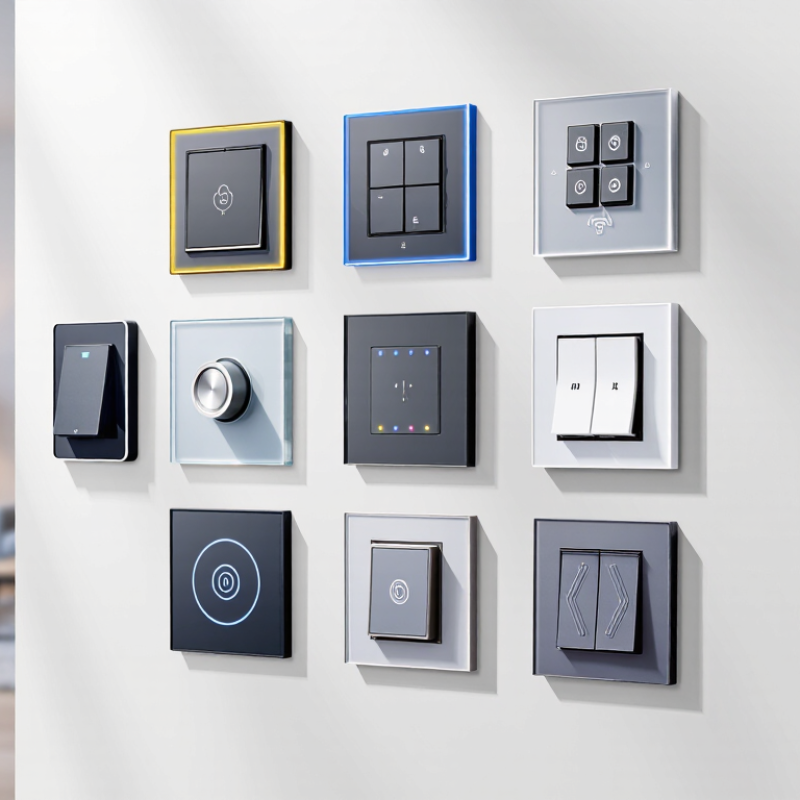
Smart wall switches differ by what they control and how people operate them. Core types include basic on/off switches, dimmers, scene switches, motion-sensing switches, and touch-control models. Others use app control, voice commands, wireless hubs, multiway control, or built-in energy monitoring. Some combine several functions, such as a dimmer with motion sensing. Choose according to the room, wiring, and daily routine—not the feature count.
A hallway may benefit from motion activation, while a living room often needs smooth dimming and scene presets. App and voice control add convenience, but they depend on a reliable network and compatible devices. Hub-based switches can connect multiple controls, though setup may take more effort. Multiway models help control one light from two locations. Energy-monitoring features can reveal usage, but their readings may not match a utility meter exactly. A Lawrence Berkeley National Laboratory review of occupancy-sensor studies reported average lighting-energy savings of about 24% in offices; results varied by space and usage. This is a useful reference, not a promise for every home.
Tips: Check for a neutral wire and confirm the switch works with your lighting load before buying. Test dimming with the actual bulbs; flicker can happen. Keep manual control simple. Fancy features are easy to overlook.
Wiring, Installation, and Electrical Compatibility
Smart wall switches can look alike, yet their wiring needs differ. Many models require a neutral wire in the wall box; older homes may not have one. Check the switch instructions and inspect the box before buying. A bare copper ground wire is not a neutral. Confusing them can create a serious hazard. Some switches support single-pole circuits only, while others work with two control points. Match the switch to the existing circuit, not just the room.
Compatibility also depends on the lights. Confirm the switch supports your lamp type, total load, and dimming needs. Low-wattage LED bulbs may flicker with an incompatible dimmer. Measure the wall box, too; smart switches can be deeper than standard ones, leaving little room for wires. Turn off the breaker and verify power is off with a suitable tester before handling wiring. If the wiring is unclear, stop and consult a qualified electrician. It is easy to assume colors tell the whole story. They do not.
Tips: Photograph the existing connections before removal. Check neutral-wire requirements, circuit type, load limits, and box depth. Never force a crowded switch into place.
Top 10 Types of Smart Wall Switches: Typical Load Control
Typical number of independently controlled loads per switch type. Actual wiring, neutral requirements, voltage, and load ratings vary by model and installation.
Single-load designs typically control one circuit; dual-load and multi-gang designs can control more. Scene keypads generally trigger automations rather than switching a load directly. Check the device specifications and consult a qualified electrician to confirm electrical compatibility.
Smart-Home Connectivity and Platform Support
A smart wall switch is useful only when it communicates reliably with the devices and controls you already use. Check its connection type before comparing features.
Wi-Fi models usually connect directly to a home network, while Zigbee and Thread switches may need a compatible hub or border router. Bluetooth can simplify nearby control, but range through walls may be limited. No hub? That can be convenient, but it is not always better.
Confirm that the switch supports your preferred control platform and the functions you need, such as voice commands, schedules, or remote access. Compatibility lists can be vague or outdated, so check the actual requirements for hubs and software versions. Details matter.
Also consider whether basic switching works when the internet is down. Some models rely heavily on cloud services; others can handle key actions locally. A steady Wi-Fi signal near the wall box helps, though thick walls and crowded networks can still cause delays. Test it first.
Setup instructions are sometimes less clear than product descriptions, and that can turn a simple installation into guesswork. Verify platform support, connection requirements, and offline behavior before buying.
How to Compare Smart Wall Switches for Different Needs
When comparing smart wall switches, start with the wiring and lights already in your home. Some models need a neutral wire; older switch boxes may not have one. Check whether the switch supports your circuit type and the number of locations controlling a light. A dimmer also needs to match the bulbs’ dimming range. Mismatches can cause flickering or a faint glow. Small details matter.
Next, weigh connectivity against everyday convenience. Wi-Fi models may connect directly to a home network, while some switches need a separate hub. A hub can add setup steps, but it may help keep devices connected when the network is busy. Consider whether you need scheduling, app control, or voice commands, and check compatibility before buying. Test the basics: can someone turn the lights on at the wall if the internet is down? Smart features are useful, but a dependable physical control matters more.
Fit and installation deserve equal attention. Compare the switch’s dimensions with the space inside your wall box, especially when several wires are present. Read the installation instructions, and consult a qualified electrician if the wiring is unclear. Look for clear specifications and applicable electrical safety certifications. A feature list can make one switch seem like the obvious choice, yet actual wiring and bulb behavior may change the decision. Even careful comparisons leave room for surprises.